
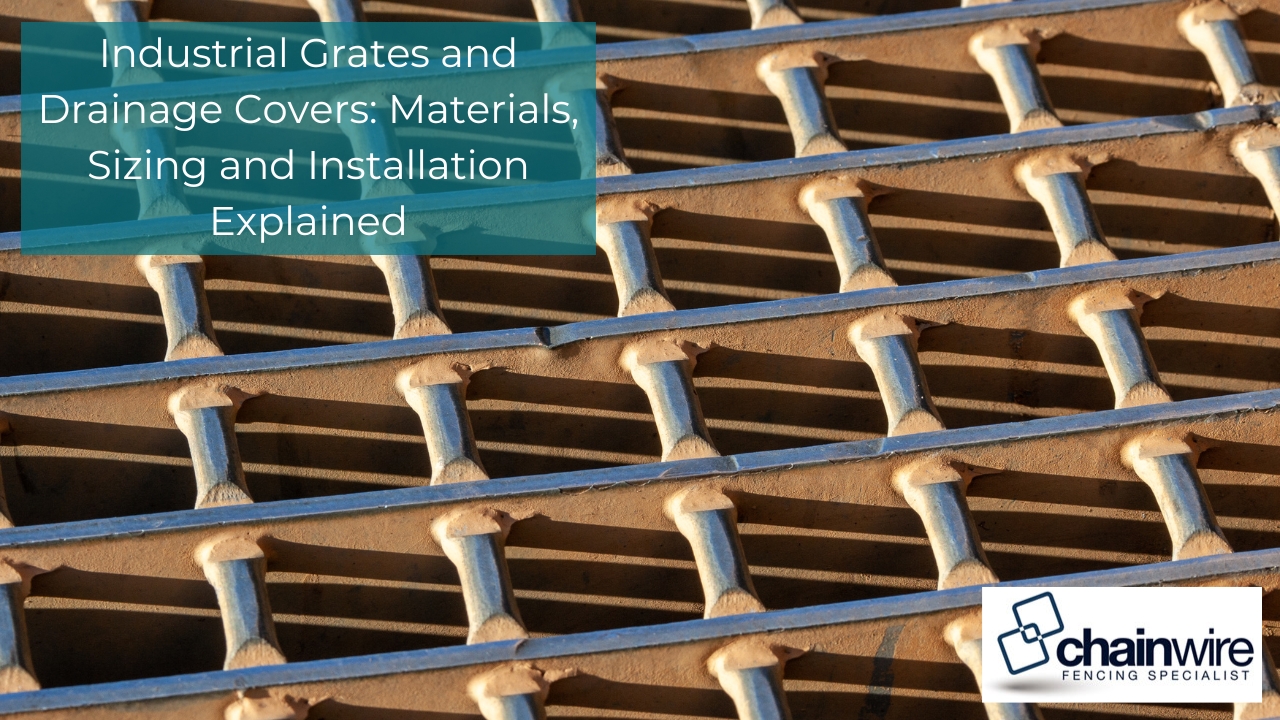
Industrial grates are welded or press-locked steel panels used for drainage, access, flooring and ventilation across factories, warehouses, walkways and outdoor sites. Choosing the right one comes down to three things: the material, the load it must carry, and how well it fits the opening. Get those right and a grate quietly does its job for decades. Get them wrong and you have a trip hazard, a blocked drain, or a panel that buckles under a forklift.
This guide covers the options and specifications so project managers, builders and facility managers can order with confidence. We fabricate custom steel grates here in Newcastle, so this is the same advice we give clients across the Hunter every week.
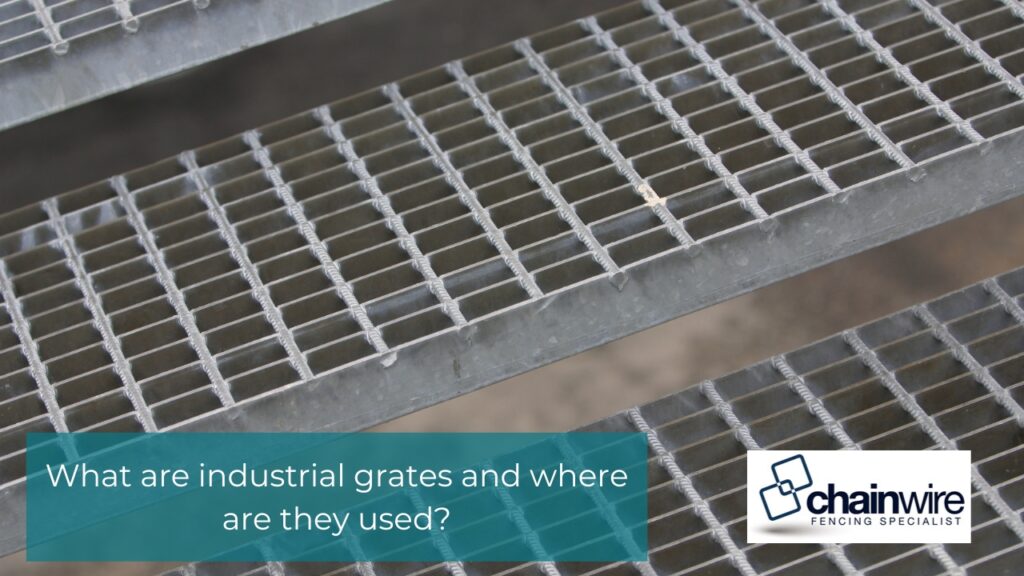
What are industrial grates and where are they used?
An industrial grate is a load-bearing panel made of steel bars, joined either by welding or by press-locking the cross bars into the bearer bars. The open pattern lets water, air and fine debris pass through while still carrying foot or vehicle traffic on top.
You will find them anywhere a surface needs to drain, ventilate or provide safe footing: stormwater and trench drainage, walkway and platform flooring, pit and sump covers, mezzanine floors, and ventilation panels. On industrial sites they often double as a safety control, keeping water and oil off the floor so people are not slipping near machinery.
Types of grates: drainage, walkway, floor and trench
The job dictates the type. The main ones we fabricate are:
- Stormwater drainage grates, which sit over pits and gullies to carry surface water away
- Trench grates, long runs that cover linear drainage channels across yards, car parks and wash bays
- Walkway and platform panels, which give workers safe, slip-resistant footing over plant and equipment
- Mezzanine and floor grates, used where an upper level needs to be load-bearing but light and open
- Pit and sump cover, which seal off access points while still allowing drainage or removal for maintenance
Material options: galvanised, stainless and aluminium
Three materials cover almost every job, and the right choice depends on the environment.
Galvanised steel is the standard for outdoor drainage and most industrial applications. The hot-dip zinc coating resists rust, it is strong, and it is cost-effective, which is why it turns up on the majority of stormwater and trench grates around the Hunter.
Stainless steel is the choice where hygiene or harsh conditions rule out galvanising. Food manufacturing, pharmaceutical facilities, commercial kitchens and marine or coastal sites all suit stainless, because it handles washdowns, chemicals and salt air without corroding.
Aluminium is the lightweight option. It is easy to handle, naturally corrosion-resistant, and tidy enough to use where appearance matters, so it suits lighter-duty access panels and ventilation grates rather than heavy traffic areas.
Load ratings explained: what does your site need?
This is the specification that matters most, because it is the one that fails dangerously if you get it wrong. In Australia, access covers and grates are classified under AS 3996, which sorts them into load classes from A through to G. Each class is the maximum load the grate can safely carry, measured in kilonewtons, where roughly 1 kilonewton equals 100 kilograms.
In plain terms, the classes scale with the traffic crossing them:
| Duty | AS 3996 class | Typical use |
| Light | Class A | Pedestrians only, walkways and paths, no vehicles |
| Medium | Class B to C | Car parks, light commercial vehicles, light forklifts |
| Heavy | Class D to E | Trucks, loaded forklifts, warehouses and loading docks |
| Extra heavy | Class F to G | Ports, airports, heavy plant and haul routes |
Choosing the class is the designer’s responsibility, and the safe rule is to specify for the heaviest vehicle that could ever cross the grate, not just the everyday one. A panel rated for foot traffic that gets driven over by a delivery truck once can fail on the spot. If you are unsure, go up a class.
Sizing and custom fabrication: why standard sizes often do not work
Off-the-shelf grates assume a standard opening. Real sites rarely cooperate. Pits are odd sizes, drainage channels follow the lie of the land, and access points end up wherever the structure allows.
Custom fabrication solves this. A grate built to measure sits flush, carries its rated load properly, and will not rock or leave a gap that catches a heel or a wheel. We size grates to fit non-standard pits, trench channels and access points, and match the bar spacing to the job, tighter where fine debris or accessibility matters, wider where flow is the priority. You can see the range on our steel grates page, and grates are one part of our wider general light fabrication service.
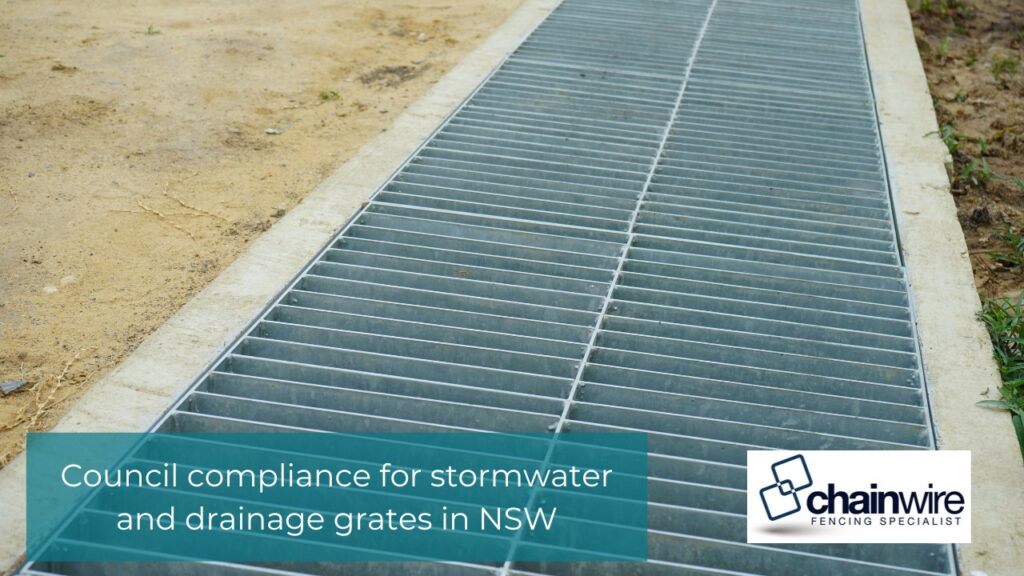
Council compliance for stormwater and drainage grates in NSW
Where a grate connects to public stormwater or sits in a development, council rules come into play. NSW councils set their own stormwater drainage requirements through their development control plans, covering how pits and grates are built, where they sit, and how they connect to the public system. The City of Newcastle, for example, sets out its expectations in its stormwater requirements, and other Hunter councils have their own standards.
The practical takeaway is to confirm the load class and any council standard drawings before fabrication, especially on a development site. Building the grate to the right AS 3996 class and the local council specification from the start saves a costly remake later. If you bring us the site details, we can fabricate to match.
Custom steel grates fabricated in Newcastle
Chainwire Fencing Specialist fabricates custom steel grates for drainage, walkways, floors and access across Newcastle, Lake Macquarie and the Hunter Valley. We work from your measurements and load requirements, build in galvanised steel, stainless steel or aluminium, and deliver a grate that fits and performs. For more on our wider metalwork, see our general steel fabrication service.
Call us on 02 4023 5416 or get in touch through our website for a quote on your grate fabrication.