
Metal grates do quiet, important work. They let water and fine debris drain away so paths and walkways stay safe, they carry foot and vehicle traffic, and they ventilate buildings. Get the material, the load rating and the fit right and a grate does its job for decades. Get them wrong and you have a trip hazard, a blocked drain, or a panel that buckles under a forklift.
We fabricate custom steel grates in our Toronto workshop, so the panel sits flush in the opening and carries its rated load properly rather than rocking or leaving a gap.
What we fabricate
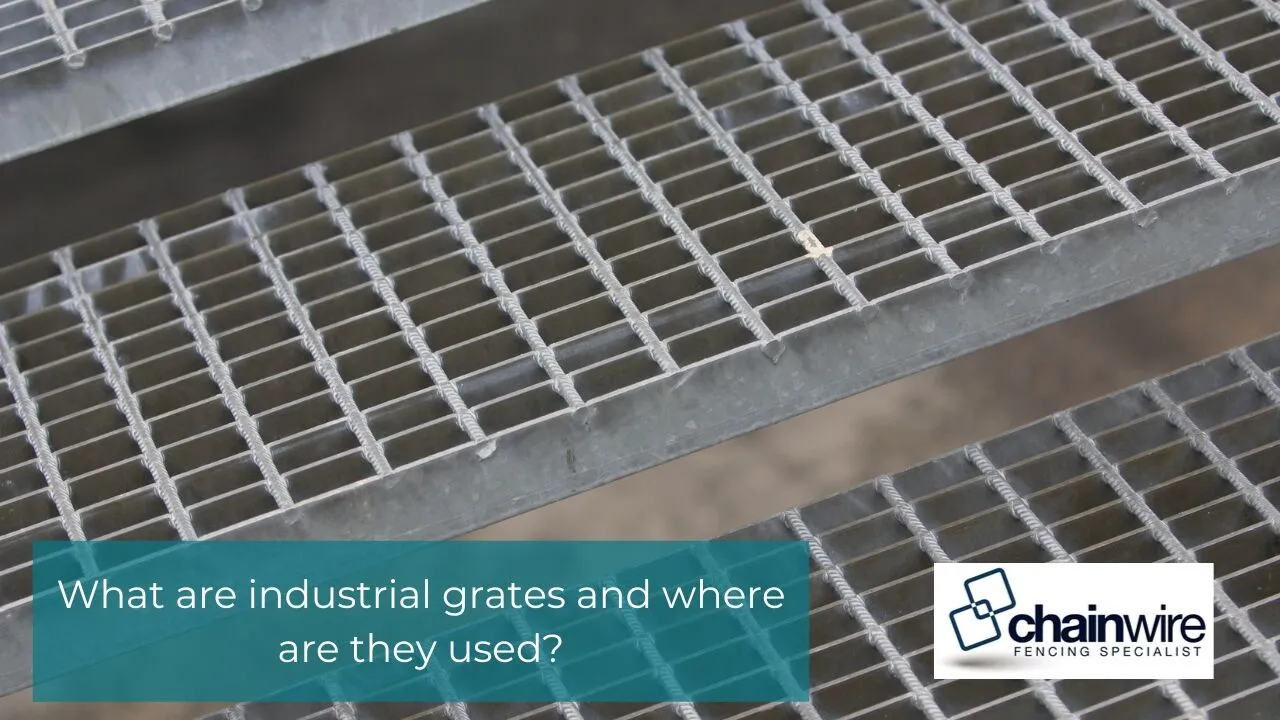
An industrial grate is a load-bearing panel of steel bars, joined either by welding or by press-locking the cross bars into the bearer bars. The open pattern drains and ventilates while still taking traffic on top. Our range covers:
- Heavy duty gratings
- Trough or trench grates, long runs over linear drainage channels in yards, car parks and wash bays
- Bar grates and floor grates
- Stair treads
- Stormwater and pit or sump covers
- Walkway, platform and ramp grating
- Stainless steel and ornamental grates
- Safety barriers
Grates are also used for shading, outdoor stairways and handrail support, and we can build ventilation grates to fit steel wall frames.
Material options
Three materials cover almost every job, and the right choice comes down to the environment.
- Galvanised steel is the standard for outdoor drainage and most industrial work. The hot-dip zinc coating resists rust, it is strong, and it is cost-effective, which is why it turns up on the majority of stormwater and trench grates around the Hunter.
- Stainless steel suits hygiene and harsh conditions: food manufacturing, pharmaceutical facilities, commercial kitchens, and marine or coastal sites that see washdowns, chemicals or salt air.
- Aluminium is the lightweight option, easy to handle and naturally corrosion resistant, best for lighter-duty access panels and ventilation rather than heavy traffic.
Finishes range from brushed or mirror surfaces where appearance matters, through to rubber coating or painting to make a surface more visible and less slippery.
Load ratings
This is the specification that matters most, because it is the one that fails dangerously if you get it wrong. In Australia, access covers and grates are classified under AS 3996, which sorts them into load classes from A through G. Each class is the maximum load the grate can safely carry, measured in kilonewtons, where roughly one kilonewton equals 100 kilograms.
| Duty | AS 3996 class | Typical use |
|---|---|---|
| Light | Class A | Pedestrians only, walkways and paths, no vehicles |
| Medium | Class B to C | Car parks, light commercial vehicles, light forklifts |
| Heavy | Class D to E | Trucks, loaded forklifts, warehouses and loading docks |
| Extra heavy | Class F to G | Ports, heavy plant and haul routes |
Choosing the class is the designer's call, and the safe rule is to specify for the heaviest vehicle that could ever cross the grate, not just the everyday one. A panel rated for foot traffic that gets driven over by a delivery truck once can fail on the spot. If you are unsure, go up a class.
Why standard sizes often do not work
Off-the-shelf grates assume a standard opening, and real sites rarely cooperate. Pits are odd sizes, drainage channels follow the lie of the land, and access points end up wherever the structure allows. Building to measure solves it: the grate sits flush, carries its load, and will not catch a heel or a wheel. We match the bar spacing to the job too, tighter where fine debris or accessibility matters, wider where flow is the priority.
Council compliance in NSW
Where a grate connects to public stormwater or sits in a development, council rules come into play. NSW councils set their own stormwater requirements through their development control plans, covering how pits and grates are built, where they sit and how they connect to the public system. The City of Newcastle sets out its expectations in its stormwater requirements, and other Hunter councils have their own. Confirm the load class and any council standard drawing before fabrication, especially on a development site, because building to the right AS 3996 class and the local specification from the start saves a costly remake later.
Bring us the site details, the opening measurements and the load requirement, and we will fabricate a grate that fits and performs. Grates are one part of our wider general steel fabrication.