
Coastal vs Inland Locations
If you live in Newcastle, Lake Macquarie, or the Hunter, you know we have two very different climates. You have the coastal suburbs like Merewether or Redhead where the salt spray hits your windows, and then you have the inland areas like Maitland or Cessnock where the heat and humidity are the bigger factors.
When it comes to Chainwire fencing, your postcode is the biggest predictor of how long that fence is going to last. A fence that lasts thirty years in Singleton might struggle to make it to ten in Swansea if you do not choose the right materials.
The Coastal Reality: Salt is the Enemy
If you can see the ocean, or even if you just get a short sea breeze, your fence is under constant attack. Salt is incredibly corrosive to standard galvanised steel. It gets into the tiny pores of the metal and starts the oxidation process almost immediately.
What happens to coastal fences:
- White rust: You will see a powdery white substance on the wire. This is the zinc coating sacrificing itself to protect the steel.
- Red rust: Once the zinc is gone, the steel underneath starts to rot. This is when the wire becomes brittle and eventually snaps.
- Joint failure: The places where the wire wraps around the posts or where bolts are used are the first to go because salt gets trapped in those tight gaps.
For these areas, we always recommend PVC-coated Chainwire. The plastic coating acts as a physical barrier that the salt cannot get through. It is an extra cost upfront, but it easily doubles the life of the fence near the water.
The Inland Advantage: Dry and Stable
Once you get past the first few hills away from the coast, the air gets much kinder to steel. In places like Rutherford or Bolwarren, a standard heavy-galvanised fence is often all you need.
Without the constant salt spray, the main things attacking your fence are UV rays and ground moisture. Galvanised steel handles these beautifully. If the fence is kept clear of long grass and debris at the base, which can trap moisture against the wire, it will stay silver and sturdy for decades.
Why Quality Coating is Not Negotiable
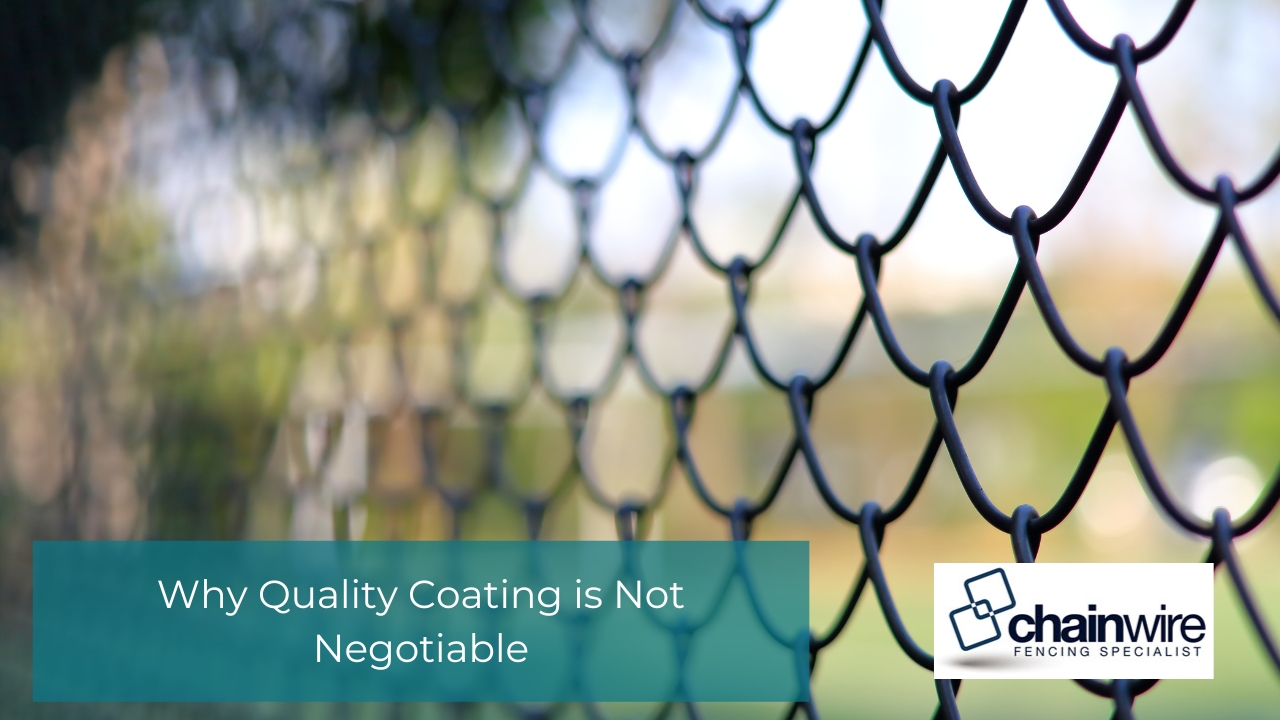
Regardless of where you live, the thickness of the coating matters. There is a big difference between cheap, imported wire and the Australian made quality fencing we use.
We see a lot of DIY jobs where the wire starts sagging and rusting within three years because the galvanising was too thin. When we complete our fencing installation, we make sure the wire gauge and the coating are matched to the specific environment of the site, and that the fence is fit for purpose, and built for longevity.
Maintenance Tips for Every Location
You can extend the life of any fence with a bit of basic care:
- Wash it down – If you are on the coast, hosing your fence down with fresh water once a month removes the salt buildup.
- Clear the base – Do not let dirt or mulch pile up against the bottom rail. This is where foot rot starts on a fence.
- Check the tension – If a fence is flapping in the wind, the wires rub together and wear down the protective coating. Keep it tight.
Expert Installation Across the Hunter
A fence is a big investment. If you are not sure whether you need the extra protection of PVC coating or if standard galvanised wire will do the job, give us a call. We have been doing this long enough to know exactly what the local weather does to a fence line.
We provide professional installation and repairs across a huge range of serviced areas, covering everything from the heavy industrial sites in the Port of Newcastle to rural boundary fences out in the valley.
If you have questions about which material is right for your property, you can reach our team on 02 4023 5416 to chat about your project or get a quote.