
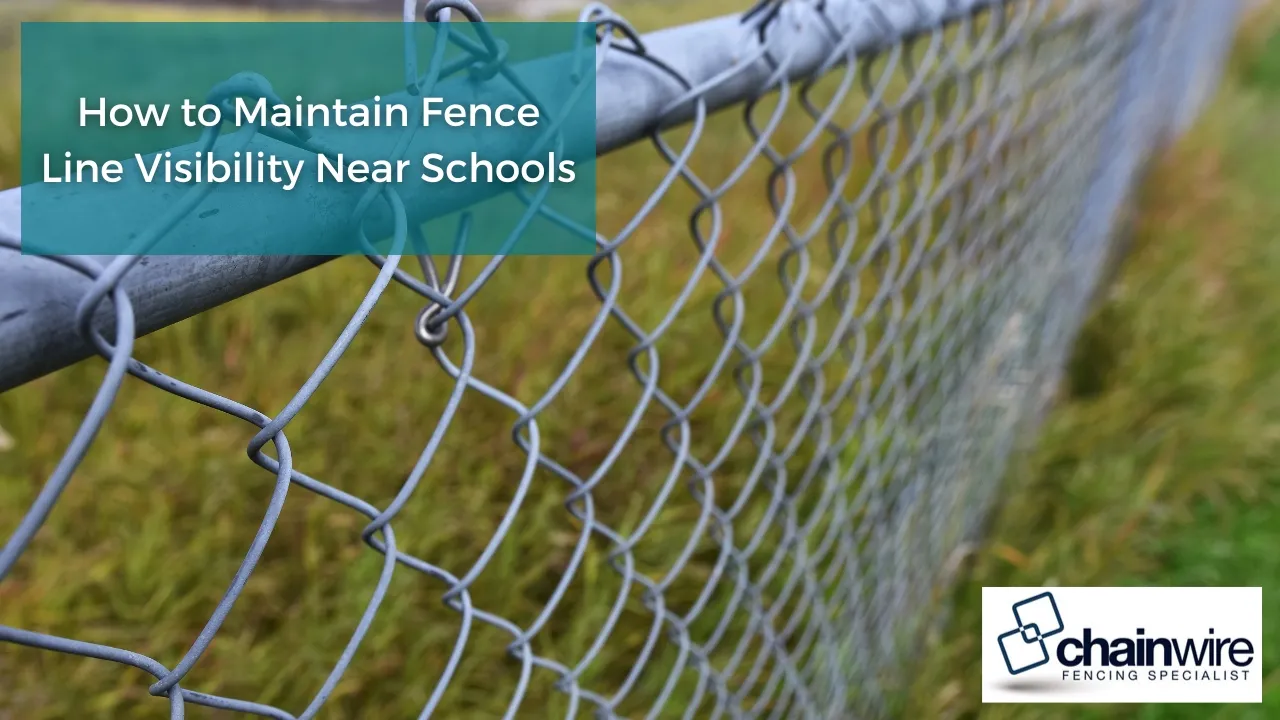
A school boundary does two jobs at once: it keeps the grounds secure, and it stays open enough that staff can supervise across it. Those pull in slightly different directions, and the balance is easy to lose when vegetation grows over the line or a damaged panel goes unrepaired. Keeping fence lines clear and visible is a safety task as much as a maintenance one, and it comes down to the right fence and a simple routine.
Why fence line visibility matters
Clear sightlines let staff watch student movement, spot hazards, and respond quickly when something is off. An open, see-through boundary also deters unauthorised access, it is much harder to approach a fence unseen when there is nothing to hide behind. And visibility reassures students and parents that the grounds are defined and supervised without feeling closed in. A well-kept fence line quietly signals a school that takes safety and its property seriously.
Choose fencing that stays visible
The material choice sets you up to succeed. Open-weave fencing like chainwire and mesh is a preferred option for schools because it is durable and secure without blocking views, so staff can supervise playgrounds and walkways across the boundary. Galvanised steel or coated wire holds up to NSW conditions with low maintenance, and pairs well with a security top or an anti-climb profile where a section needs extra deterrence without losing sightlines. For higher-security frontages, our national knowledge site covers the options in school security fencing.
The common problems that reduce visibility
- Overgrown vegetation. The number one culprit, shrubs, trees and long grass block views and can damage the fence. Keep it trimmed back from the line.
- Litter and clutter collecting near the base obstructs sightlines and holds moisture against the fence.
- Rust and weather damage weakening wire or posts, creating gaps and sagging that make a section harder to monitor.
- Too much signage or decoration fixed to the fence, which blocks the open areas that need to stay clear.
Catch these early and they are trims and quick repairs; leave them and they become both a supervision gap and a bigger maintenance bill.
A simple maintenance routine
Keeping a school fence clear is not complicated, it just needs to be regular:
- Trim vegetation along the line before it overgrows, and clear debris from the base.
- Inspect several times a year, and always after storms or heavy growth periods, for rust, loose fittings, damaged panels and sagging.
- Repair promptly. A torn or sagging section is both a security hole and a visibility gap, so fix it quickly and to match the existing fence.
- Keep the base clean so moisture and soil do not build up and start corrosion, which extends the life of the materials too.
A few school-specific points
- Emergency access. Fencing should include clear access points with lockable gates that open quickly in an emergency while still restricting everyday access.
- Anti-climb where it is needed. Anti-climb designs, top rails and good lighting discourage after-hours climbing and vandalism without closing off the view during the day.
- Meet the standards. School fencing must comply with Australian Standards and local council requirements, which a professional installer will build to.
The practical takeaway: choose open fencing like chainwire so the boundary is secure and supervisable, then keep the line trimmed, inspected and promptly repaired. That routine keeps sightlines clear year-round. We supply, install and maintain school fencing across Newcastle, the Hunter and the Central Coast, and can inspect an existing boundary and recommend what it needs.