
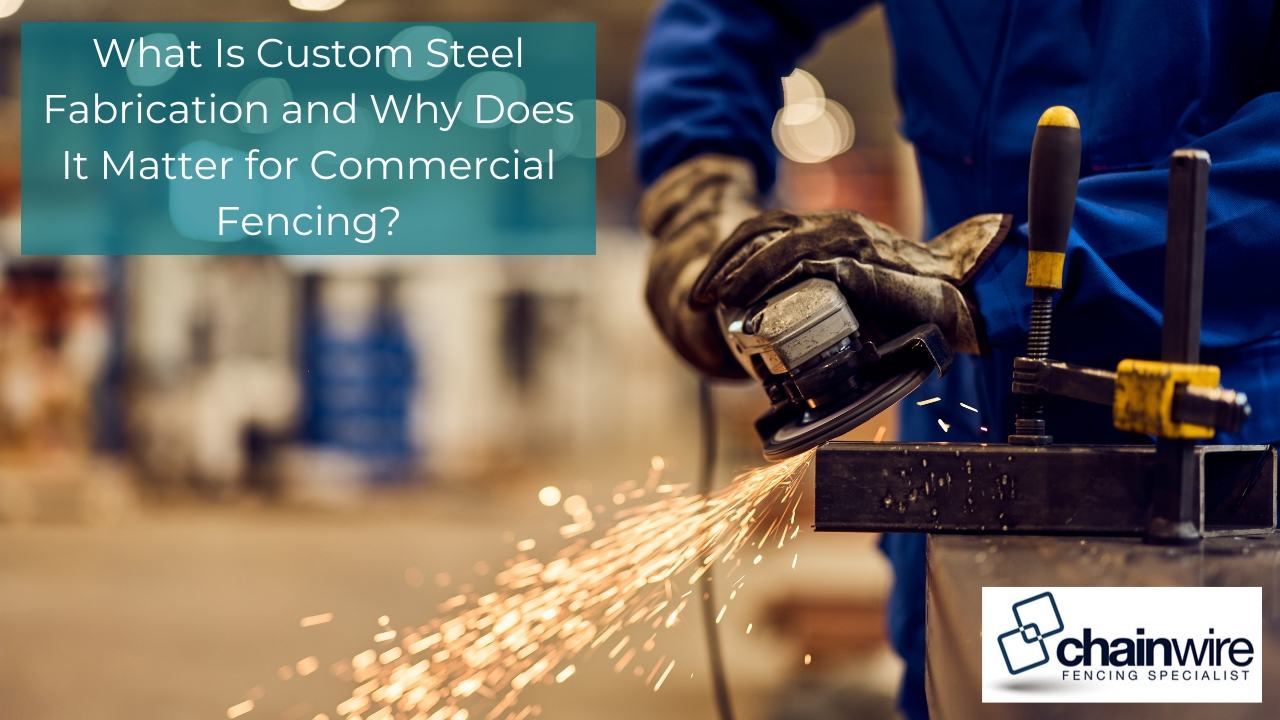
When a commercial or industrial site needs fencing, the default option is often to order from a catalogue. Standard panels, standard posts, standard heights. It ships fast and it is simple to price. For a suburban boundary fence, that approach works fine.
For anything more demanding, it usually falls short. Sites with uneven terrain, non-standard access points, heavy vehicle movement, or specific security requirements cannot always be solved with off-the-shelf products. That is where custom steel fabrication comes in.
This article explains what fabrication involves, where it applies in commercial fencing, and what to look for when choosing a fabrication specialist in Newcastle and the Hunter Valley.
What does custom steel fabrication involve?
Fabrication is the process of transforming raw steel into a finished structural component built to a specific design. Rather than selecting a product that already exists, fabrication starts with a specification and works backwards from it.
That specification might come from an engineer, a site manager, an architect, or simply from the physical requirements of the job. A gate that needs to span an irregular opening. A mesh panel that must fit a non-standard height. A perimeter frame with specific load-bearing requirements. Each of these needs a component built to size, not an approximation sourced from stock.
The result is a component that fits the application precisely, performs to the required specification, and does not rely on workarounds during installation.
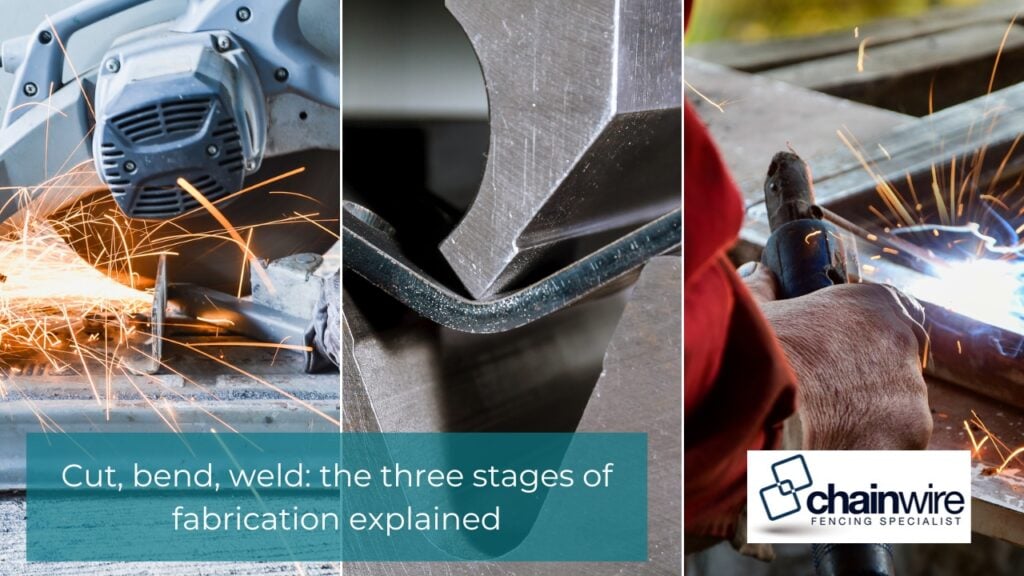
Cut, bend, weld: the three stages of fabrication explained
Most fabrication work comes down to three core processes, applied in sequence to transform steel sections into finished components.
Cutting
Steel is cut to length and shape before any other work begins. Depending on the material and the job, this is done with circular saws, flame cutters, or plasma cutters. Plasma cutting is particularly common for precise profile work, as it produces clean edges with minimal distortion on thinner steel sections.
Modern fabrication shops use computer-aided design software to feed cut dimensions directly to machinery. This reduces the margin for error and speeds up the process on repeat components.
Bending
Where a component needs to follow a curve, angle, or arch, the cut steel is fed through bending rollers or press brakes to achieve the required shape. This is how curved gate frames, arched top rails, and angled structural elements are formed.
The degree of bend matters. Over-bending weakens the material at the bend point. Experienced fabricators know the tolerances for each steel grade and section size.
Welding
Welding joins the cut and forms components into a finished structure. It is the stage that determines the structural integrity of the final product. The weld quality determines how well the finished structure handles load, stress, vibration, and long-term wear.
For commercial and industrial fencing components, weld quality is not a cosmetic consideration. A poorly welded gate frame or perimeter post will fail under the same conditions it was installed to handle.
Why off-the-shelf fencing fails commercial and industrial sites
Standard fencing products are manufactured in fixed dimensions for the broadest possible market. They are designed to be economical, not to solve specific problems. That is a reasonable trade-off for residential applications. It is less suitable when the site has unusual requirements.
Consider a logistics yard with an entry point that was widened to accommodate B-double trucks. A standard sliding gate will not span the opening. A fabricated gate can be built to whatever width and structural weight the application requires.
Or a construction compound on a sloping site in the Hunter Valley where the ground drops 600mm across the fencing run. Standard panels leave gaps at the base or need to be shimmed in ways that compromise the fence line. Fabricated panels built to the actual site levels eliminate both problems.
The other limitation of off-the-shelf products is the finish compatibility. Standard fencing comes in whatever powder-coat colours the manufacturer offers. If you are matching existing site infrastructure, a building facade, or a client’s corporate colour specification, standard options may not be available. A fabricated component can be finished in any powder-coat colour or galvanised to a specific grade.
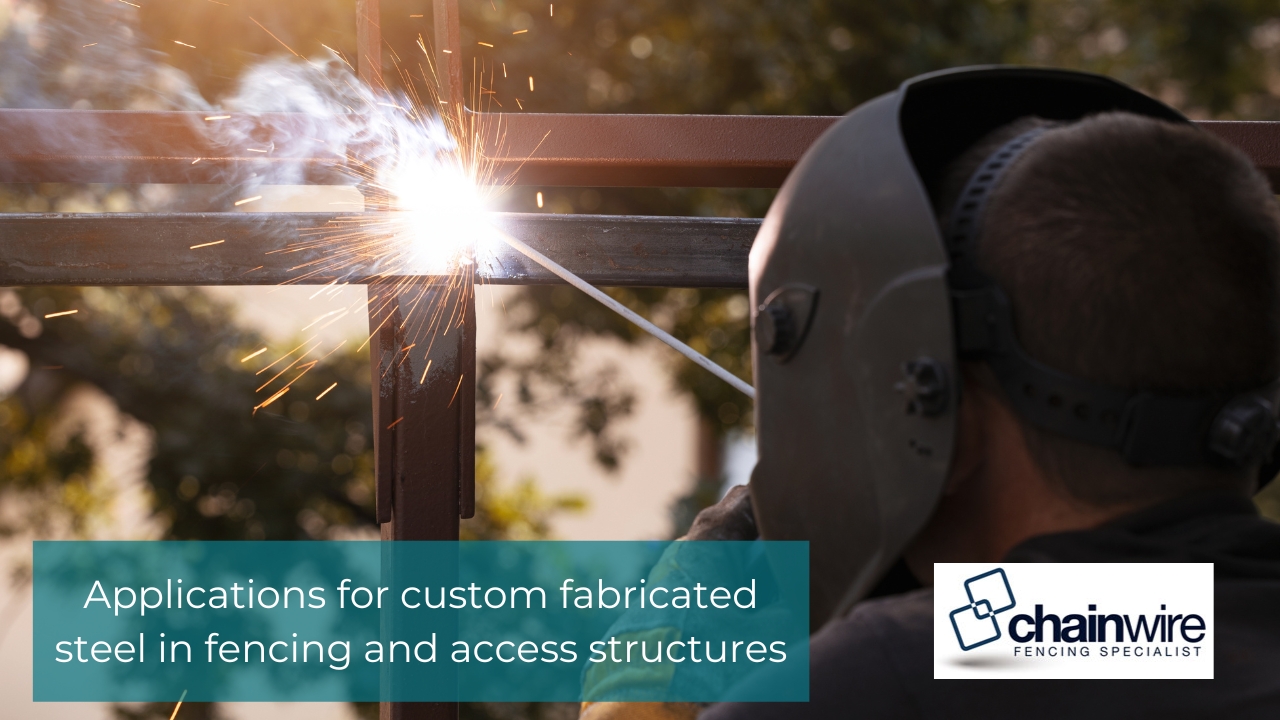
Applications for custom fabricated steel in fencing and access structures
Custom fabrication applies across a broad range of fencing and access work on commercial and industrial sites. The most common applications in the Newcastle and Hunter Valley region include the following.
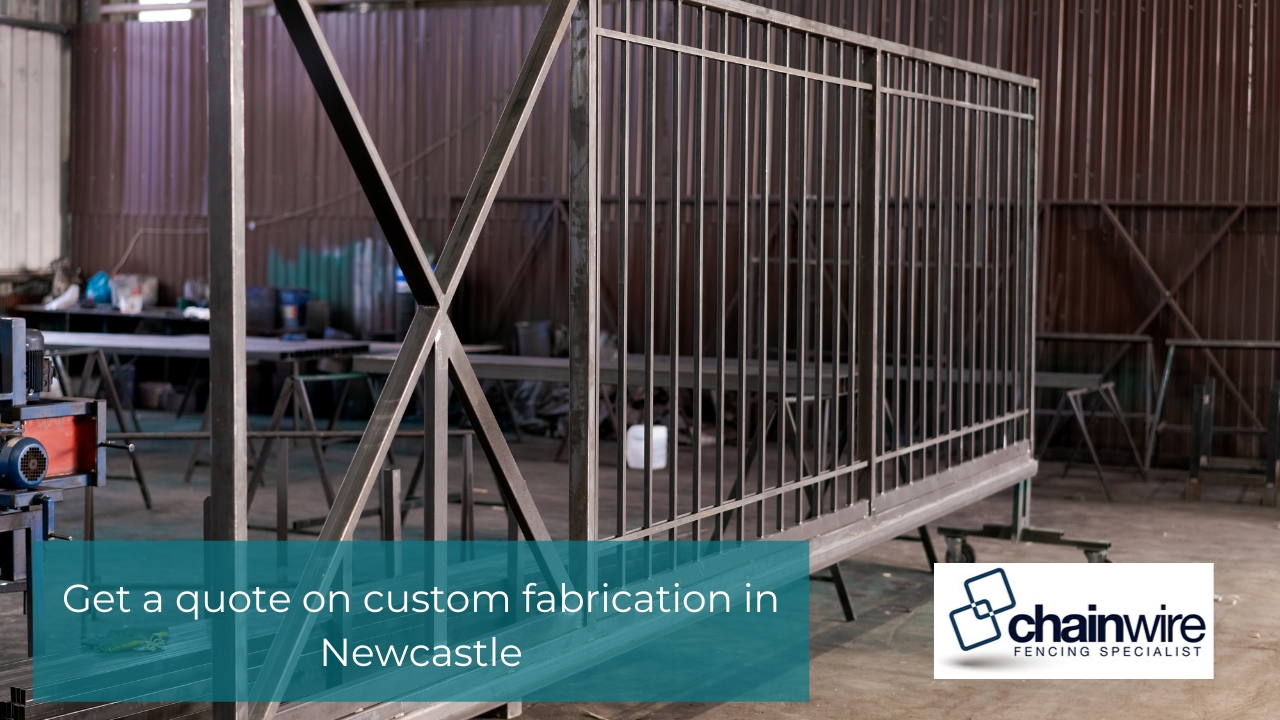
Gate frames for large openings are one of the most frequent fabrication requirements. Swing and sliding gates for driveways, compound entries, and truck access points can be fabricated to any span, with commercial-grade hinges, automated systems, and locking hardware specified to the application.
Industrial perimeter fencing on mining, logistics, and port sites often involves long linear runs with specific height, mesh grade, and anti-climb requirements. Steel fencing for these applications is typically fabricated on site or prefabricated in sections to suit installation conditions, particularly where terrain or access limits what can be brought in pre-assembled.
Access structures including pedestrian barriers, stairwell guards, platform railings, and vehicle bollard systems are all within the scope of general steel fabrication work. These components are not fencing in the traditional sense but are closely related to site security and perimeter management.
Structural components for fencing systems, including custom post bases, anchor brackets, tension wire assemblies, and frame supports, are often required when a standard system is being adapted to a non-standard site condition.
How to choose a fabrication specialist in Newcastle
Not every business that does fencing does fabrication, and not every fabrication shop has the site experience to understand fencing requirements. For commercial and industrial work, the two disciplines need to overlap.
Look for a fabricator who has completed work on sites with similar requirements to yours. Relevant project experience matters more than general capability claims. A company that has fabricated gates and perimeter structures for mine sites, rail corridors, and aerospace facilities understands the standards, the documentation, and the site safety requirements that come with those environments.
Check that they can provide finished components, not just raw fabrication. Galvanising and powder-coating are part of the finished product. A fabricator who handles the full process from steel selection through to applied finish gives you a single point of accountability for the result.
Ask how they handle non-standard jobs. The answer tells you whether you are dealing with a fabricator who can genuinely solve problems or one who will send you back a standard quote regardless of what you asked for.
Get a quote on custom fabrication in Newcastle
Chainwire Fencing Specialist handles custom steel fabrication for commercial, industrial, and infrastructure fencing projects across Newcastle and the Hunter Valley. From gate frames and mesh panels to structural components and access structures, we fabricate to your specification and finish to the grade your site requires. Contact Chainwire Fencing Specialist for a free quote on your next project.