
Living in a bushfire-prone area means thinking carefully about every part of your property, and fencing is no exception. Fences are usually put up for security, boundaries or stock control, but in a fire they can also influence how flames move around a property. The right material can reduce risk and limit damage. The wrong one can carry fire straight to your buildings.
Why fencing matters in a fire zone
During a bushfire, fences are often among the first structures hit by radiant heat and embers. Timber fences can ignite quickly and carry fire along a boundary line toward sheds, garages, houses and vegetation. Metal fencing performs far better. It may still take heat damage, but it is much less likely to ignite or feed the fire's spread. Choosing non-combustible materials makes a real difference on bushfire-prone land across Australia.
Chainwire fencing
Chainwire is one of the most suitable options for bushfire-prone areas. It is typically galvanised steel with very little combustible material in it. Its open mesh lets wind pass through rather than acting as a solid barrier that traps heat, and it offers no fuel for flames to run along a boundary. It is widely used on rural land, solar farms, infrastructure sites and large properties where durability and fire resistance matter, and it is easy to repair if sections are damaged in extreme conditions.
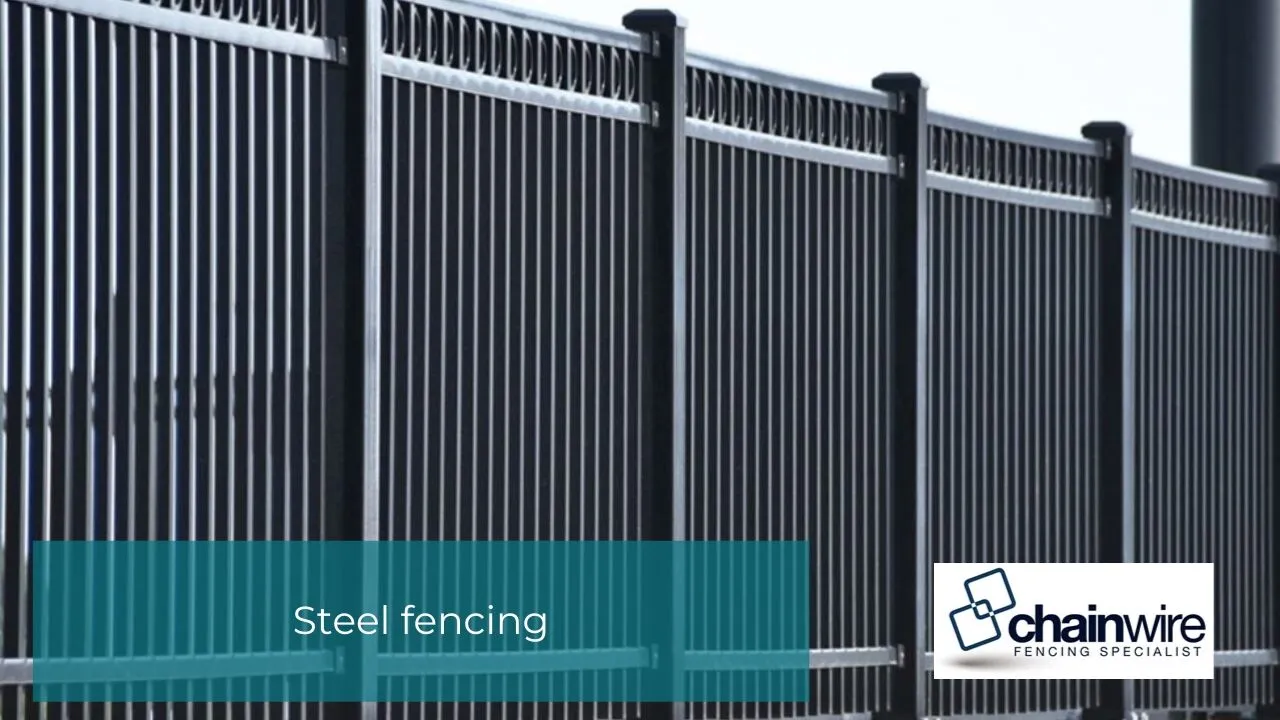
Steel fencing
Steel fencing is another strong option. Steel posts and panels withstand high temperatures far better than timber. Paint coatings may be affected by heat, but the structural components usually stay intact. Steel suits security fencing, boundary fences and industrial properties, and galvanised or powder-coated steel adds corrosion resistance and long-term durability.
Aluminium fencing
Aluminium fencing is lightweight, corrosion resistant and non-combustible. It is common for residential fencing, pool fencing and decorative boundaries. Aluminium can soften under extreme heat, but it does not ignite the way timber does, which makes it a safer choice than any combustible material in a fire zone.
What to avoid
Timber is generally the least suitable option in bushfire-prone country. Dry timber ignites easily from wind-borne embers, and once alight a timber fence can act like a fuse carrying fire across a property. Just as important, keep the fence line clear: brush, vegetation and debris building up against a fence adds fuel regardless of what the fence is made of.
Design matters, not just material
Beyond the material, how the fence is built and placed makes a difference:
- Open-style fencing such as chainwire lets air move and reduces heat building along the boundary. Solid fences trap embers and heat against the structure.
- Metal posts set in concrete give stronger support in extreme conditions.
- Keep vegetation trimmed back from the fence line to reduce fuel.
These small choices help cut the chance of damage during a fire.
Choosing the right fence
If you live on bushfire-prone land, chainwire, steel and aluminium all give you non-combustible options that are durable, low maintenance and far less likely to feed a fire. Which one suits depends on the property, the security you need and the terrain.
One important point: bushfire safety requirements vary by location and are tied to your property's assessed bushfire attack level. Always check the current bushfire planning and construction requirements with the NSW Rural Fire Service or your local council before installing fencing in a bushfire-prone area, and where a building is involved, the construction standard AS 3959 will guide what is required.