
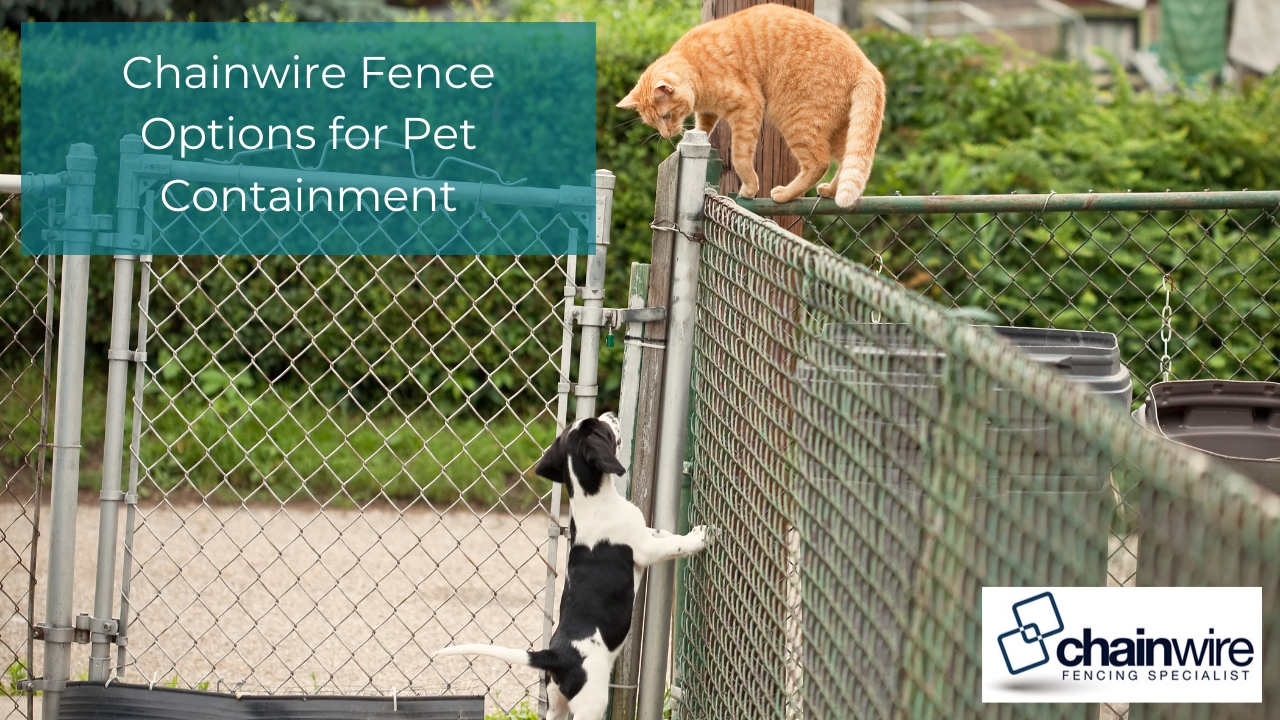
The right Chainwire configuration for pet containment depends on the animal. Dogs need height and buried skirts to stop digging. Cats need angled tops or enclosed runs. Poultry need small-aperture welded wire mesh and overhead netting. Each setup is sized and specked on site.
Most pet escapes happen because the fence was built for looks, not behaviour. A standard 1.2 m Chainwire fence that works fine for a border collie will not hold a determined husky or a cat that has figured out it can climb. Getting the spec right upfront saves the cost of fixing it later.
We install pet and animal enclosures across Newcastle, Lake Macquarie, and the Hunter Valley. Below is a plain-language breakdown of what works for different animals and why.
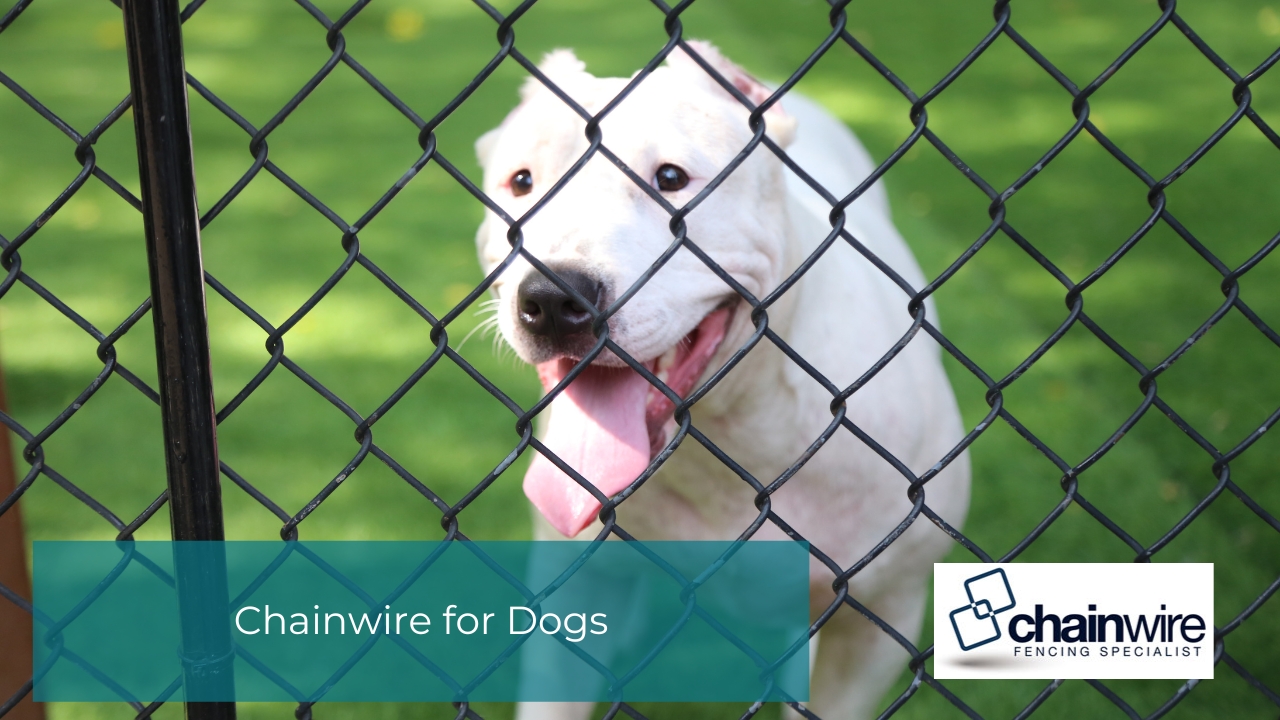
Chainwire for Dogs
Dogs escape three ways: jumping over, digging under, or forcing through weak points. The fence spec needs to address whichever applies to your breed.
Height
1.2 m handles most medium breeds. 1.5 m covers larger dogs. 1.8 m with a short inward lean at the top is the spec for consistent jumpers. The lean does not need to be large. 150 mm of outward angle at the top is usually enough to break a dog mid-climb.
Buried Skirts
A buried mesh skirt extends the fence underground, turned outward, to stop dogs that dig along the perimeter. Standard installation depth is 300 mm. Not every dog needs it, but for breeds like huskies, malamutes, or terriers it is worth doing from the start rather than retrofitting later.
Mesh Gauge
Heavier gauge wire for large or powerful dogs that push or scratch at the fence. Standard Chainwire works for most medium breeds. We assess this on site based on the dog.
Chainwire for Cats
Cats are climbers, not jumpers. A straight vertical fence, regardless of height, will not contain a motivated cat. The two configurations that work are:
- Fully enclosed cat runs with overhead netting or solid mesh roof.
- Fence-top barriers with an inward-angled mesh section, typically 300-400 mm wide, that a cat cannot pull itself over.
Welded wire mesh with smaller apertures is the better choice over open Chainwire for cats and kittens. It reduces the risk of legs or heads getting caught in the mesh.
Chainwire for Poultry and Small Animals
Chickens, ducks, rabbits, and guinea pigs all need small-aperture welded wire mesh rather than standard Chainwire. The tighter weave keeps small animals in and stops predators reaching through.
Overhead coverage is almost always required for poultry. Foxes will go over the top of an open run. Options are netting stretched across the top of the enclosure or a fully framed panel roof, depending on the size of the area and what predators are present on the property.
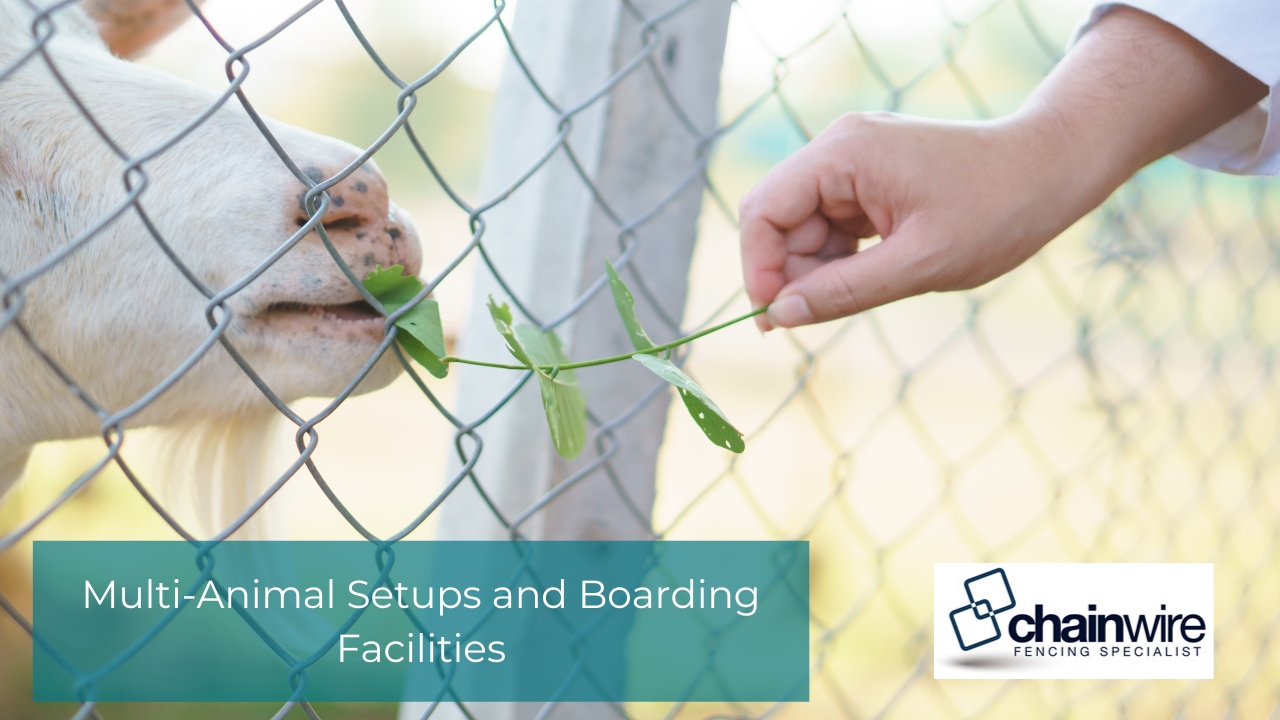
Multi-Animal Setups and Boarding Facilities
Boarding kennels, vet clinics, hobby farms, and rescue shelters have more complex requirements. Separate runs, self-closing gate hardware between pens, and layouts that reduce animal stress all need to be considered at the design stage. We cover this in more detail on our animal enclosure fencing page.
Gates are fabricated in our Toronto factory, so sizing and hardware can be matched to the specific use, whether that is a small access gate for feeding or a full-width sliding gate for vehicle movement.
Quick Reference: Chainwire Spec by Animal Type
- Dogs (medium breeds): 1.2-1.5 m standard Chainwire, buried skirt optional
- Dogs (large/escape-prone breeds): 1.8 m with inward lean, buried skirt recommended
- Cats: Fully enclosed run or inward-angled fence-top barrier, small-aperture welded mesh
- Poultry: Small-aperture welded mesh, overhead netting or framed roof
- Rabbits/guinea pigs: Small-aperture welded mesh, solid base recommended
- Boarding kennels / vet clinics: Custom design, self-closing hardware, separate pen access
FAQ
What height Chainwire fence do I need for a dog?
1.2 m for most medium breeds. 1.5 m for larger breeds. 1.8 m with an inward lean for dogs that consistently jump or climb. We assess this on site.
Can Chainwire contain a cat?
Standard Chainwire alone will not hold a cat. You need either a fully enclosed run with an overhead section, or a fence-top barrier with an inward-angled return. Smaller-aperture welded wire mesh is also recommended over open Chainwire for cats.
How deep should a buried skirt go for a dog?
We install buried skirts to approximately 300 mm depth, turned outward underground. This stops dogs from digging under the fence line.
What mesh is best for chickens?
Small-aperture welded wire mesh is the standard. It keeps chickens in, keeps predators from reaching through, and is rigid enough to stand without posts every metre. Overhead netting or a framed roof is also needed if foxes are present.
Do you service the Hunter Valley for pet enclosures?
Yes. We install animal enclosures across Newcastle, Lake Macquarie, the Hunter Valley, and surrounding regions including Port Stephens, Maitland, and Cessnock.
Call us on 02 4023 5416 or visit our contact page to arrange a site visit and quote for your pet enclosure.