
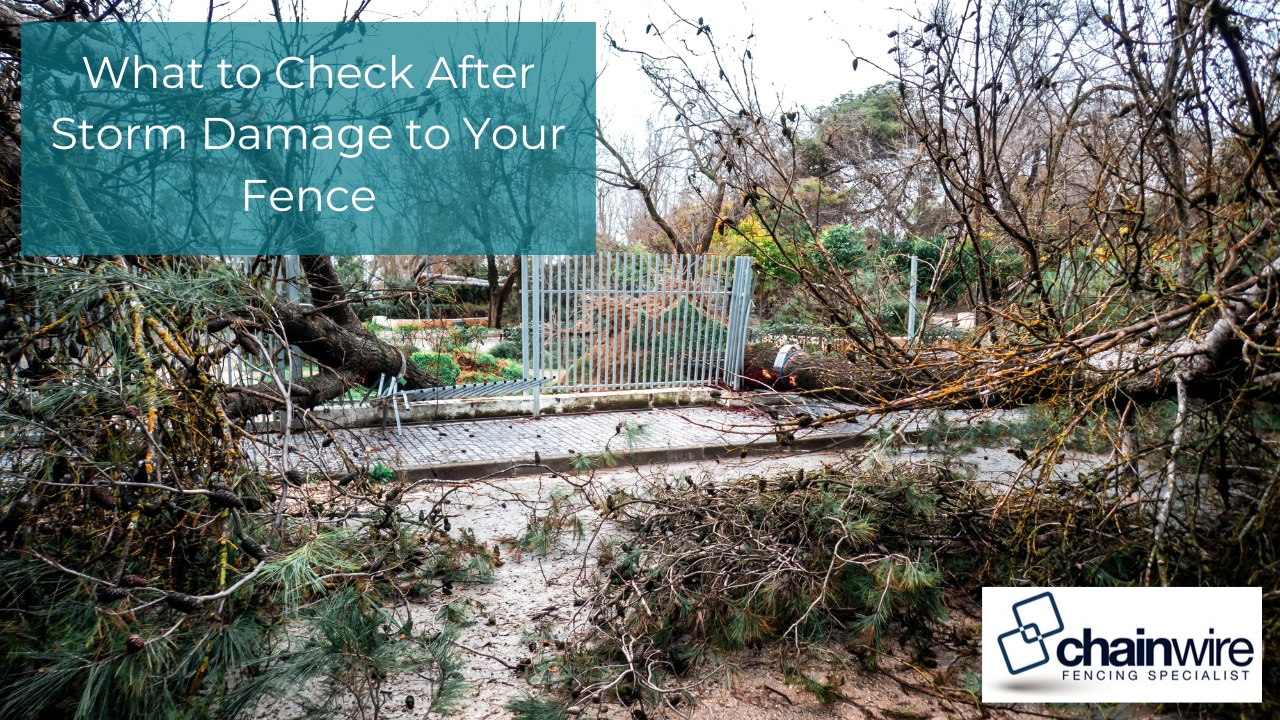
A bad storm can do a lot to a fence overnight. Posts lean, mesh pulls away from the line, gates stop latching, and what looked fine at 5pm is a liability by morning. Before you call anyone, it’s worth doing a proper walk of the perimeter so you know what you’re dealing with.
Start With the Posts
Posts are the first thing to check. Look for any that are leaning, lifted at the base, or cracked at ground level. A post that looks upright from a distance can still have significant movement if the concrete footing has shifted. Push on it gently. If there’s rock, it needs attention.
Galvanised steel posts will often show rust streaking at the base where water collects after a storm. That’s worth noting even if the structural damage seems minor. Rust at the footing is a longer-term problem if left untreated.
Check the Mesh
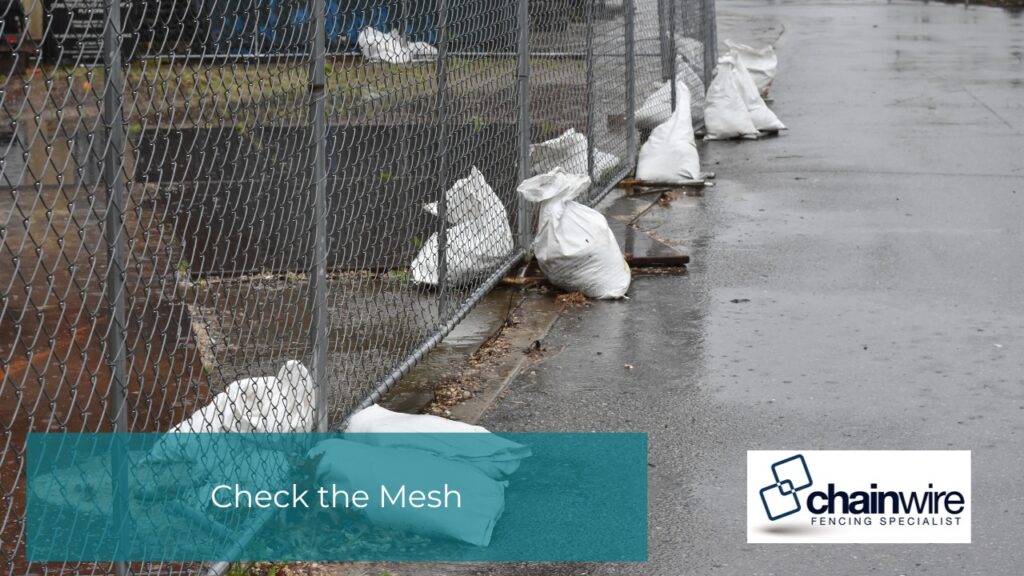
Walk the full fence line and look for mesh that’s torn, pushed inward, or pulling away from the top rail. Wind-driven debris is a common cause. Branches and loose materials can punch straight through Chainwire mesh or catch on it and pull a section out of shape.
If you have a long perimeter fence, check the corners and gate openings first. Those areas take more strain in high winds.
Gates and Latches
Gates are often the first casualty in a storm. A gate swinging in the wind puts stress on the hinges and frame with every gust. After the storm, check that the gate sits square in the frame, opens and closes properly, and latches securely.
A gate that won’t latch is a security and liability issue, especially on commercial and industrial sites. Don’t leave it until next week.
Look For Debris Caught in the Fence
Branches, roofing iron, and other debris can add significant weight and pressure to a fence line and can cause damage that isn’t immediately obvious. Remove what you can safely, then inspect the mesh and rails underneath. Even if the fence looks intact, debris loading can weaken the connections between the mesh and the top and bottom rail.
Document Everything Before You Touch It
Before you start clearing debris or making temporary repairs, take photos. Walk the perimeter and photograph every damaged section from multiple angles. This matters if you’re making an insurance claim, and it also helps whoever comes out to quote the repair work understand the full scope before they arrive on site.
When To Act Urgently
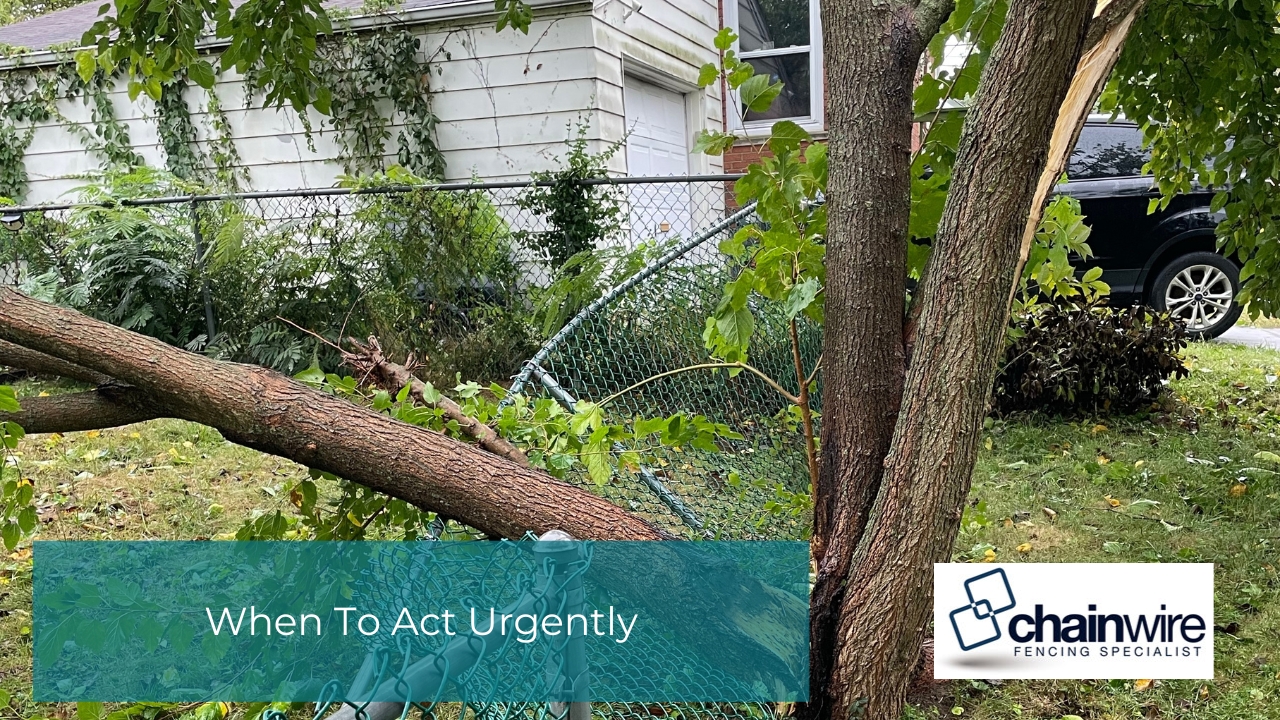
Not all storm damage needs to wait for a formal repair quote. If the fence has collapsed onto a neighbouring property, is blocking a road or access point, or has left a gap in the perimeter of a secure site, treat that as urgent.
We work across construction sites, rail corridors, mine sites, and industrial properties throughout the Newcastle and Hunter Valley region. Our staff hold current site-specific SWMS documentation and are trained and ticketed to work across a range of site types, so we can mobilise quickly when the job needs it. If you need someone to assess the damage without delay, get in touch with us directly.
Repair Or Replace?
Once you’ve done the inspection, the question becomes whether to repair the damaged sections or replace them. For most storm damage to Chainwire fencing, localised repair is the practical option. That typically means replacing posts, re-tensioning or patching mesh, and straightening rails in the affected area.
If the fence is older and multiple sections have been affected, it’s worth getting a full assessment. Sometimes a repair quote and a replacement quote are closer than people expect, and a new fence will outperform a patched one for the next decade.
With over 20 years of experience and all fencing installed to Australian Standards, we’ll give you a straight answer on what needs doing and what can wait. Our fencing services cover supply and installation of temporary and permanent Chainwire fencing across Newcastle, Lake Macquarie, Port Stephens, Maitland, Cessnock, the Central Coast, and most of NSW. Call us on 02 4023 5416 to talk it through.