
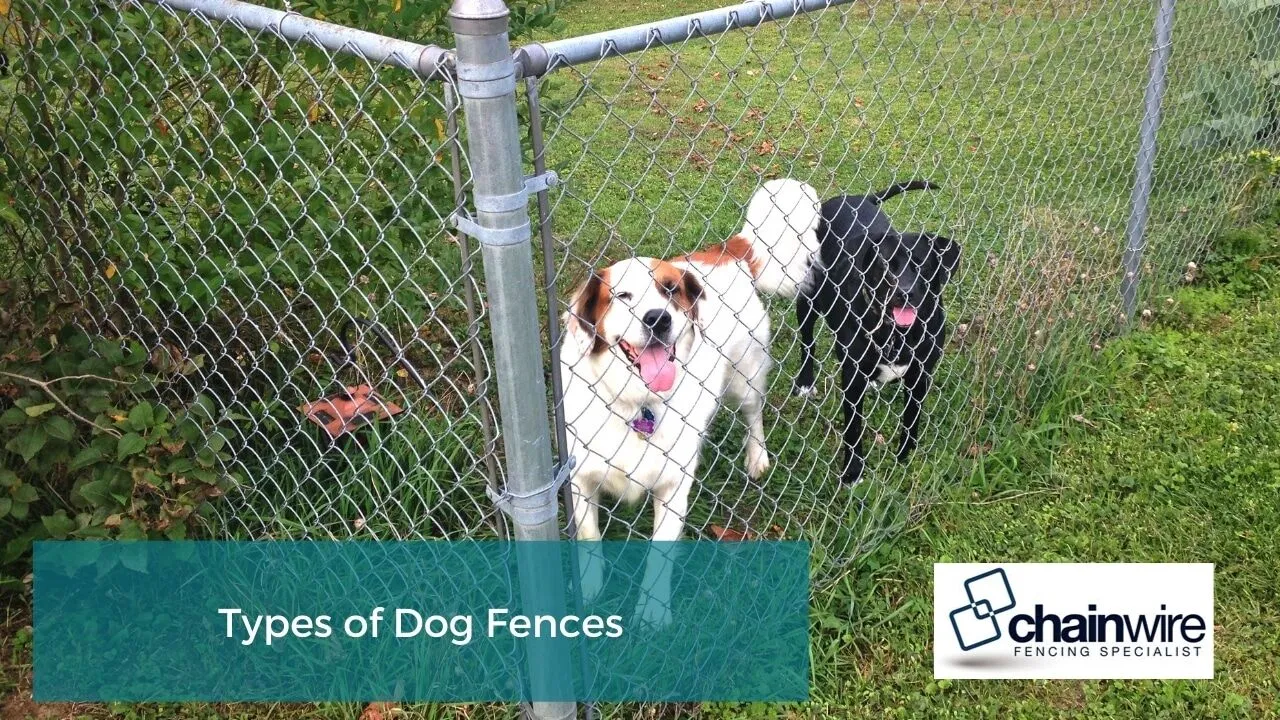
Most pet escapes happen for the same reason: the fence was built for looks, not for the animal. A standard 1.2 m fence that holds a border collie will not hold a husky that digs or a cat that climbs. Getting the spec right up front is far cheaper than fixing it after your dog has learned it can get out. This is a practical guide to fencing a yard for pets, from choosing the right chainwire setup for each animal to keeping the rest of the backyard safe.
Why chainwire suits pet containment
Chainwire is the go-to for pet and animal enclosures because it does the job without creating new problems. It is durable and economical, it lets fresh air through, and, crucially, it is open, so you can see the animal and the animal can see you. A dog shut behind a solid fence often gets more anxious and more determined to escape, while an open fence lets it settle. Galvanised chainwire resists rust and weather, has no sharp edges or loose parts to injure a pet, and when a section gets damaged you replace just that panel rather than the whole run.
Chainwire for dogs
Dogs escape three ways: over the top, under the bottom, or through a weak point. The spec addresses whichever applies to your dog.
Height. As a rule of thumb, 1.2 m holds most medium breeds, 1.5 m covers larger dogs, and 1.8 m with a short inward-angled return at the top is the setup for consistent jumpers. The return does not need to be large; a modest inward angle at the top is usually enough to break a dog mid-climb.
Buried skirts for diggers. A mesh skirt extends the fence underground, turned outward, so a dog that digs along the fence line hits mesh instead of soft ground. Around 300 mm depth is standard. Not every dog needs it, but for known diggers like huskies, malamutes and terriers it is worth doing from the start rather than retrofitting. An L-footer (mesh laid flat along the base in an L-shape) or a concrete plinth under the runs and gates does the same job.
Mesh gauge. Heavier gauge wire suits large or powerful dogs that push and scratch at the fence; standard chainwire is fine for most medium breeds. On a really determined escaper, a stronger anti-climb return or even a fence-within-a-fence around a dedicated run is the answer.
Chainwire for cats
Cats are climbers, not jumpers, so a straight vertical fence will not hold a motivated cat no matter how tall it is. Two setups work:
- A fully enclosed run with overhead netting or a solid mesh roof.
- A fence-top barrier with an inward-angled mesh return, typically 300 to 400 mm wide, that a cat cannot pull itself over.
For cats and kittens, small-aperture welded wire mesh is a better choice than open chainwire, because it reduces the risk of a leg or head getting caught. A catio, an enclosed patio run with perches and ramps, gives a cat safe outdoor time without any chance of a breakout.
Chainwire for poultry and small animals
Chickens, ducks, rabbits and guinea pigs all need small-aperture welded wire mesh rather than standard chainwire, so the weave is tight enough to keep them in and stop a predator reaching through. Overhead coverage is almost always needed for poultry, because a fox will simply go over the top of an open run. Depending on the size of the area and the predators about, that means netting across the top or a fully framed panel roof. For rabbits and guinea pigs, a solid or buried base stops both digging out and predators digging in.
A quick spec reference
| Animal | Typical setup |
|---|---|
| Dogs, medium breeds | 1.2 to 1.5 m standard chainwire, buried skirt optional |
| Dogs, large or escape-prone | 1.8 m with inward return, buried skirt recommended |
| Cats | Fully enclosed run, or inward-angled top return, small-aperture welded mesh |
| Poultry | Small-aperture welded mesh, overhead netting or framed roof |
| Rabbits, guinea pigs | Small-aperture welded mesh, solid or buried base |
| Boarding kennels, vet clinics | Custom design, self-closing gates, separate pen access |
Every one of these is sized and specced on site, because the right answer depends on the animal and the ground, not a standard measurement.
A dedicated dog run
If a dog is destructive when left alone in the whole yard, a dedicated chainwire run gives it a space to be a dog without wearing a path along the boundary. Build it as large as the space allows, make the base dig-proof with buried mesh or boards, and think about the floor: gravel drains well, is easy to clean and is kinder on paws than raw concrete, while plain grass quickly turns to dirt then mud. Provide shade and a sheltered spot to rest, and if you use a shade panel, angle it so it drains rather than pools.
A good fence makes good neighbours
Containing your dog is not only about the dog. A fenced yard keeps your pet off the street and the neighbour's lawn, keeps it safe from being lost, stolen or hurt, and gives neighbours peace of mind, especially those with small children. For a dog that barks at everything passing, a screen of bamboo or reed rolls along the chainwire blocks the view and takes away the trigger, without losing the airflow the mesh provides.
Keep the whole backyard safe
A secure fence is one part of a safe yard. A few other hazards catch pet owners out:
- Toxic plants. Lilies are extremely toxic to cats, and oleander, cycads, foxgloves, buttercups and lily of the valley are all dangerous. Cocoa mulch, bone and blood meal, and scented fertilisers can harm dogs. Check any new plant or garden product before it goes in, and if you are unsure, ask your vet.
- Water. Pools and ponds are drowning and chemical risks. Block unsupervised access with a barrier that meets both pool safety and animal containment, and give ponds a shallow ledge so a pet can climb out.
- Ticks, fleas and baits. Keep grass mown and leaf litter cleared, use vet-approved parasite treatments, and avoid poison baits outdoors, since a pet that catches a poisoned rodent can be poisoned in turn.
- Heat. Provide shaded rest spots and keep water bowls in the shade, using non-metal bowls that will not heat up and burn a pet's mouth.
The takeaway
The fence that holds your pet is the one built for its behaviour: match the height and mesh to the animal, add a buried skirt for diggers and an inward return for climbers, and use tighter welded mesh with overhead cover for cats and poultry. Then look past the fence to the rest of the yard, and clear the plant, water, pest and heat hazards that a fence cannot fix. Chainwire Fencing Specialist has installed pet and animal enclosures, dog runs and poultry pens across Newcastle, Lake Macquarie and the Hunter since 2004, and specs each one on site to the animal it has to hold.