
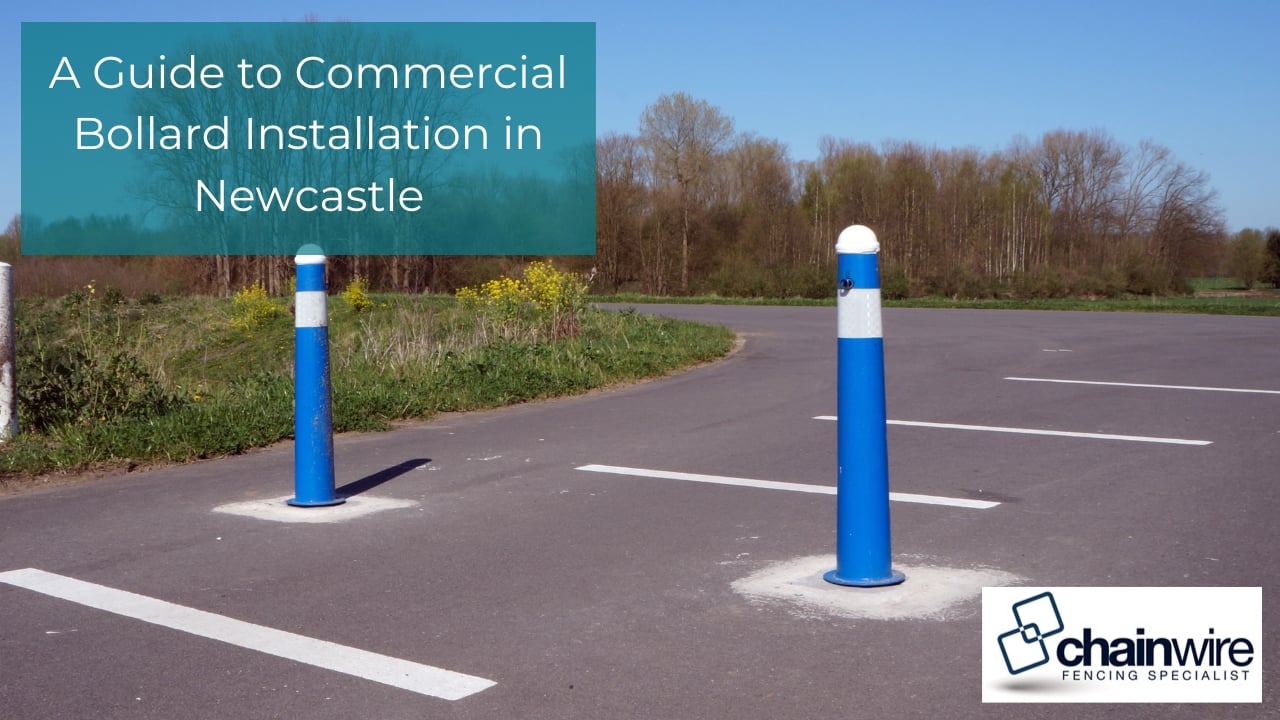
Bollards are one of the most practical site management tools available to commercial property owners and facility managers, and one of the most underspecified. They get installed in carparks and outside storefronts, but the decision is often made on price and availability rather than on what the site needs.
Get the type wrong and you end up with fixed bollards in a location that needed flexible access, or light-duty posts in a loading dock that takes heavy vehicle contact daily. This guide covers what bollards do, how the main types differ, and what to consider before installation on a commercial or industrial site in Newcastle.
What are bollards and what do they do?
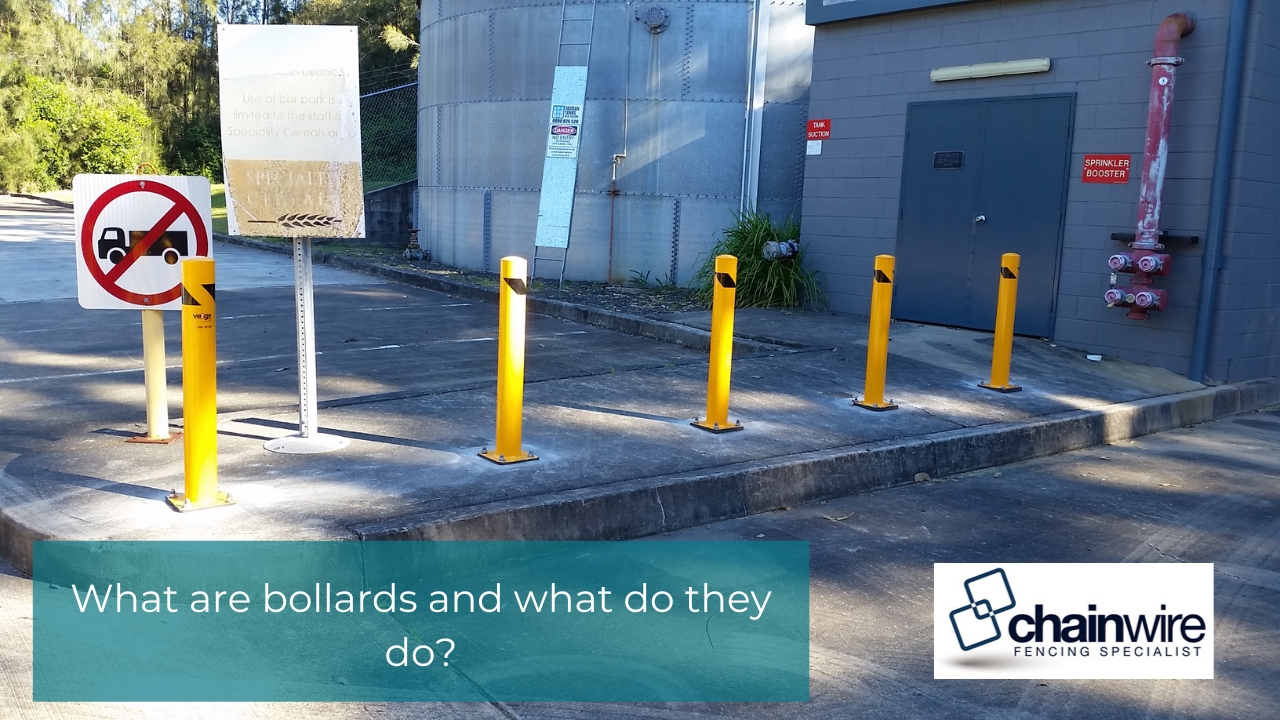
A bollard is a short vertical post installed in the ground or fixed to a surface to control vehicle and pedestrian access, protect property from vehicle impact, or define boundaries within a site. They are used wherever you need to limit what can pass through a space, and how.
In practice that covers a wide range of situations: stopping vehicles from mounting a footpath, preventing unauthorised parking in a loading zone, protecting the corner of a building from reversing trucks, or blocking access to a restricted area after hours. The common thread is that bollards create a physical boundary that signage alone cannot.
Commercial bollards are typically made from steel, though stainless steel, aluminium, and concrete variants exist for specific applications. Steel is standard for most industrial and commercial work because it is strong, weldable, and can be finished to suit almost any environment or aesthetic requirement.
Types of bollards: fixed, removable and retractable
The three main categories cover most commercial installation scenarios. Choosing between them comes down to how permanent the restriction needs to be and how often access needs to be granted or revoked.
Fixed bollards
Fixed bollards are permanent installations, either set into the ground with a concrete footing or bolted to a surface via a base plate. They do not move and are not intended to. Their purpose is to create a permanent physical barrier against vehicle access or impact.
Standard duty fixed bollards run to 90mm diameter with a 4mm wall thickness and stand 940mm above ground. Where heavier vehicle contact is expected, such as loading docks, freight yards, and bus depots, 140mm or 165mm diameter bollards with a 5mm wall at 1,100mm height provide better protection for both property and people. Heavy duty applications can go up to 219mm diameter with a 6.4mm wall.
Fixed bollards can be concrete-filled for anti-ram applications. A hollow steel bollard filled with concrete resists vehicle impact far more effectively than an empty tube of the same diameter, which matters for ram-raid deterrence at retail sites and for perimeter protection at high-value facilities.
Removable bollards
Removable bollards use a two-piece system: a sleeve concreted into the ground and a post that slots into it and locks in place. When access is needed, the post is unlocked and lifted out, leaving the sleeve at ground level. When the restriction is back in place, the post is replaced and locked.
They are available in padlock or key-operated configurations and come in 90mm and 140mm diameters. Post holders and hangers allow the removed post to be stored neatly nearby rather than left on the ground. A galvanised steel plug sits in the sleeve when the post is removed to protect pedestrians and tyres from the open socket.
For sites with suspended slabs where in-ground installation is not possible, a bolt-down version is available with a 10mm high base plate and a hinged lid that padlocks to the stem.
Retractable and collapsible bollards
Retractable bollards are stored below ground when not in use and raised when the restriction is needed. They operate on a padlock or key mechanism, sit at 114mm diameter with a 900mm above-ground height when deployed, and are suited to situations where access needs to be granted and revoked regularly without removing and storing a separate post.
Collapsible bollards fold flat rather than retracting underground. They have a 150mm wide face, stand 800mm high when deployed, and collapse to just 85mm. These are used primarily for traffic management and site access control where high visibility is important, and the ground conditions make in-ground sleeves impractical.
Common commercial and industrial uses for bollards in Newcastle
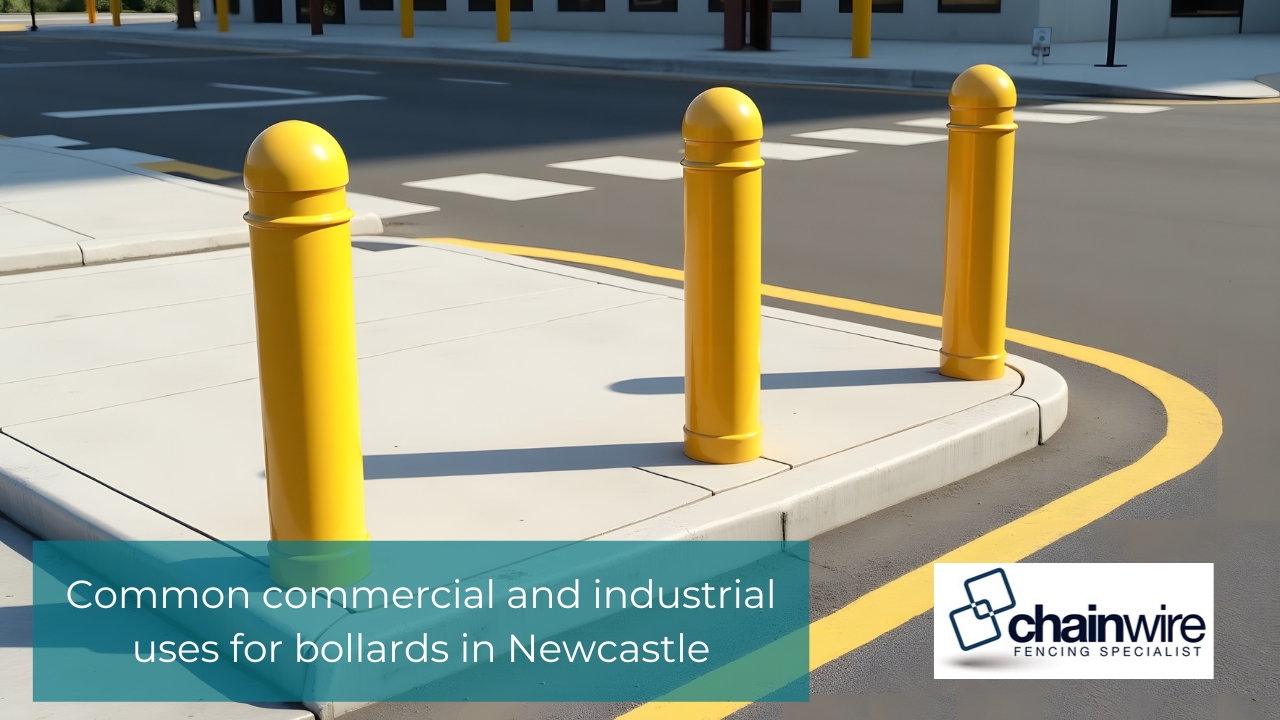
Carparks are one of the most common installation sites. Bollards define pedestrian pathways, protect stairwell entries and lift lobbies from reversing vehicles, mark the boundary between parking zones and access lanes, and control entry after hours. In multi-storey carparks around the Newcastle CBD, stainless steel bollards are often used in visible locations where appearance matters as much as function.
Loading docks and warehouse entries require heavy-duty fixed bollards to protect building corners, dock levellers, and roller door frames from vehicle contact. A reversing truck that clips a steel bollard causes minor damage. A reversing truck that hits an unprotected building corner or dock mechanism causes major damage.
Retail and commercial frontages use bollards to separate pedestrian zones from traffic lanes and to deter vehicle-based attacks on storefronts. In higher-traffic areas such as Hunter Street and the broader Newcastle CBD retail strip, this combination of pedestrian safety and anti-ram protection is increasingly common in new fitouts and building upgrades.
School drop-off zones, childcare centres, and public facilities use removable or collapsible bollards to manage access during specific periods while keeping the area open at other times.
Industrial sites, including manufacturing facilities, transport depots, and mining support operations across the Hunter Valley, use heavy-duty fixed bollards for perimeter protection and to define safe zones around plant and equipment.
Bollards for pedestrian safety vs vehicle control: what is the difference?
Not all bollards do the same job, and specifying the wrong type for the purpose is a common mistake.
Pedestrian safety bollards are primarily about defining space and preventing accidental vehicle incursion. A 90mm standard duty bollard is sufficient to mark a pedestrian path, protect a building corner from slow-moving traffic, or prevent casual parking in a no-parking zone. It is not designed to stop a vehicle travelling at speed.
Vehicle control bollards for high-impact scenarios, including ram-raid deterrence and anti-vehicle attack protection, require a heavier specification. Concrete-filled fixed bollards at 140mm or larger diameter, set into reinforced footings with adequate spacing, are the appropriate solution where the threat is a vehicle under power rather than an accidental contact.
If you are specifying bollards for a site near a public road or footpath, council requirements may apply. Some installations near road corridors require development consent or engineering certification depending on the local authority and the nature of the installation. It is worth confirming requirements with Newcastle City Council or the relevant local authority before proceeding.
Material options: steel vs stainless steel vs concrete bollards
Mild steel is the standard material for commercial and industrial bollards. It is strong, weldable, available in a range of section sizes, and can be finished in powder coat or hot-dip galvanised to suit the environment. Standard finish is safety yellow powder coat for high-visibility applications. Custom colours and plain galvanised finishes are available.
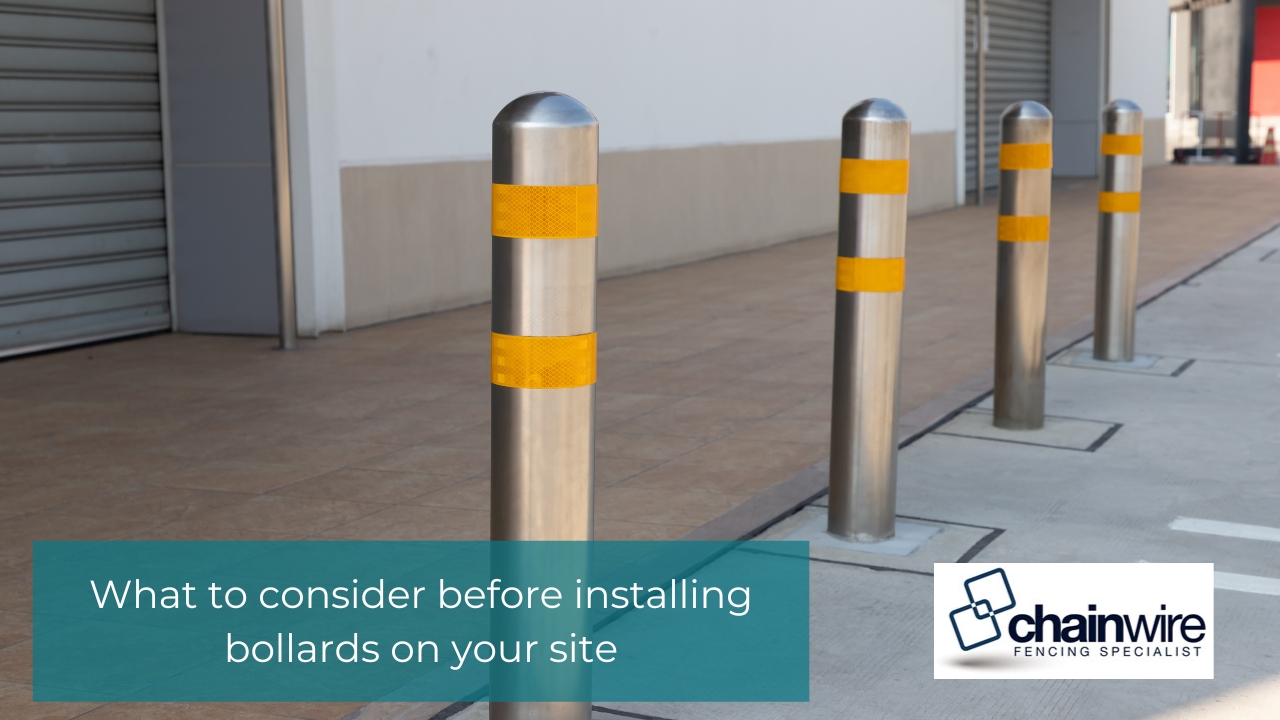
Stainless steel bollards are specified where aesthetics is a consideration, such as building entries, retail precincts, and premium commercial fitouts. The standard grade for most applications is 304 stainless, finished to a level 4 brushed surface. For coastal and marine environments, 316 grade stainless offers better resistance to salt-induced corrosion and is worth the additional cost on sites near the water.
Concrete bollards are used primarily in streetscape and public realm applications. They have good impact resistance and require no surface treatment, but they are heavy to install, cannot be modified after placement, and offer limited options for access management. For commercial and industrial sites, steel is almost always the more practical choice.
What to consider before installing bollards on your site
Start with what the bollard needs to stop. A slow-moving car in a carpark requires a different specification from a loading dock that takes daily truck contact. Define the threat or access scenario first, then work backwards to the bollard type, diameter, and fixing method.
Consider whether the restriction is permanent or needs to be flexible. If the access requirement will change, such as a driveway that is open during business hours and restricted overnight, a removable or retractable bollard makes more sense than a fixed installation.
Check the substrate. In-ground installations require adequate depth and a stable footing. On suspended concrete slabs, bolt-down base plate options avoid the need to core through the structural slab. On bitumen surfaces, both in-ground and surface-mount options are available.
Think about the finish relative to the environment. Coastal sites near Newcastle Harbour or Lake Macquarie benefit from galvanised or 316 stainless steel. Inland and low-exposure sites are fine with standard powder coat. For high-visibility safety applications, safety yellow is the standard. For commercial and streetscape settings, colour-matched or stainless finishes are appropriate. Chainwire Fencing Specialist supplies and installs a full range of commercial bollards across Newcastle and the Hunter Valley, from standard duty carpark bollards through to heavy-duty fixed installations for industrial and security applications. Contact Chainwire Fencing Specialist for a free quote on bollard supply and installation for your site.