
When you plan a fence, budget, purpose, looks and the rules all come into it, but two factors do most of the deciding: how long the fence lasts and what it costs. Ranking the common materials on those two together is the fastest way to narrow the field. Here is how they compare, and which ones we build.
The durable materials, ranked
Masonry is the most durable barrier you can build. A brick or concrete wall lasts for decades with almost no maintenance, blocks noise, and shrugs off pests and weather. The catch is a high upfront cost and, often, council approval, and it is a bricklaying trade rather than a fencing one, so it is not something we build. It is the yardstick the fences below are measured against.
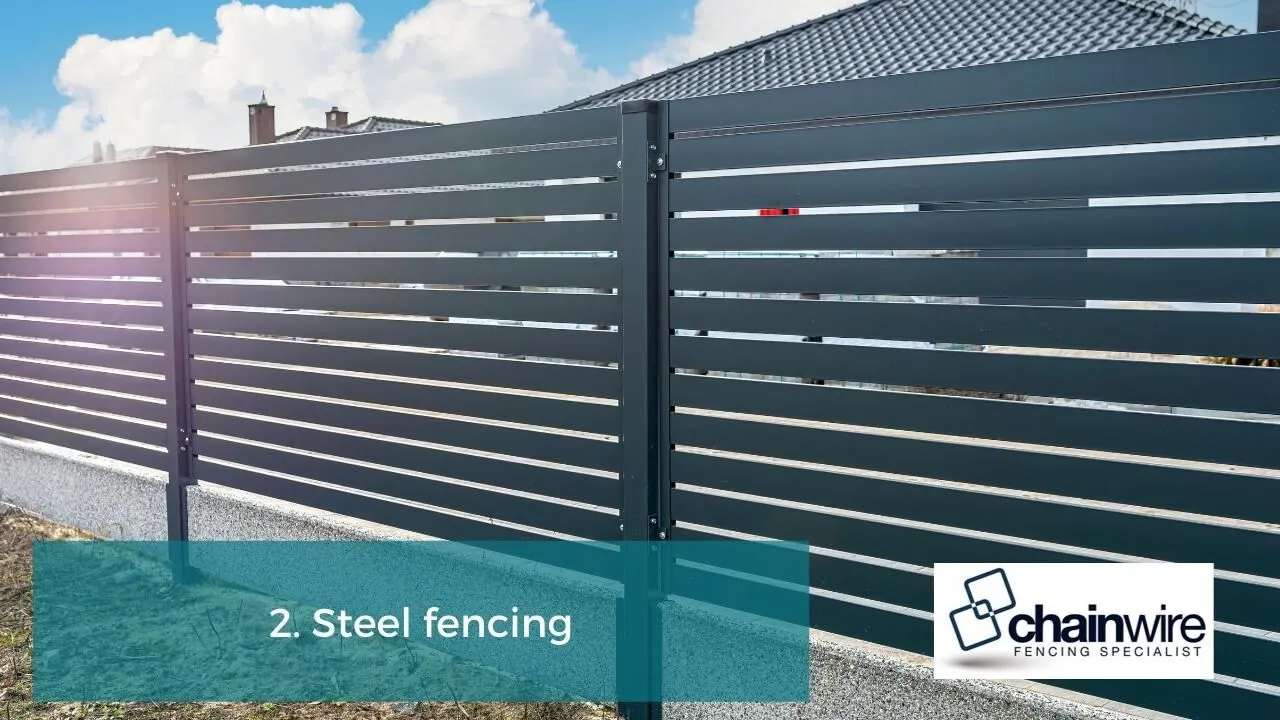
Steel sits at the top of the fencing materials. It is tough, resists impact and wind, and galvanised (zinc-coated) steel holds off rust and corrosion for decades. A steel fence does not bow or bend easily, which makes it a strong deterrent against forced entry and vandalism. It costs more than the lighter options, but with a proper coating it can last a lifetime with minimal upkeep, and it suits coastal Newcastle sites once galvanised.
Aluminium is the value-durable pick. As a lightweight, low-density metal it is naturally corrosion-resistant, which makes it excellent for coastal and exposed sites where salt air punishes other materials. It costs less than masonry or steel, needs no painting, and is fully recyclable. It gives a clean, timeless look for a boundary where heavy security is not the priority.
Chainwire, also called cyclone or hurricane fence, is the durable workhorse. It is strong, weather-resistant and holds up in harsh conditions, while being the most cost-effective on this list for both material and installation. That combination is why it secures large areas like sports fields, car parks and agricultural land, and why it is our flagship product.
Durability against cost at a glance
| Material | Durability | Relative cost | Do we build it? |
|---|---|---|---|
| Masonry wall | Highest | Highest upfront | No, different trade |
| Steel | Very high | Higher | Yes |
| Aluminium | High | Moderate | Yes |
| Chainwire | High | Lowest | Yes |
Choosing between them
The right pick follows the job. For maximum security and a long life on a commercial or industrial site, steel earns its cost. For a clean, low-maintenance boundary in a coastal or garden setting, aluminium is the smart middle. For securing a large area or a boundary where a clear view matters, chainwire delivers the most durability per dollar. Our guide to the cost-effectiveness of chainwire against other materials goes deeper on the value comparison, and the seven fencing types we build covers where each fits.
The takeaway
Rank a fence on durability and cost together and the field clears quickly: masonry is the most durable but is a wall, not a fence; steel is the toughest fencing material; aluminium is the corrosion-proof middle ground; and chainwire gives the most durability for the least outlay. Match the material to what the fence has to do and where it sits, and the choice usually makes itself. Chainwire Fencing Specialist designs, fabricates and installs in chain mesh, solid steel and welded tube, tailored to your security, access and site.