
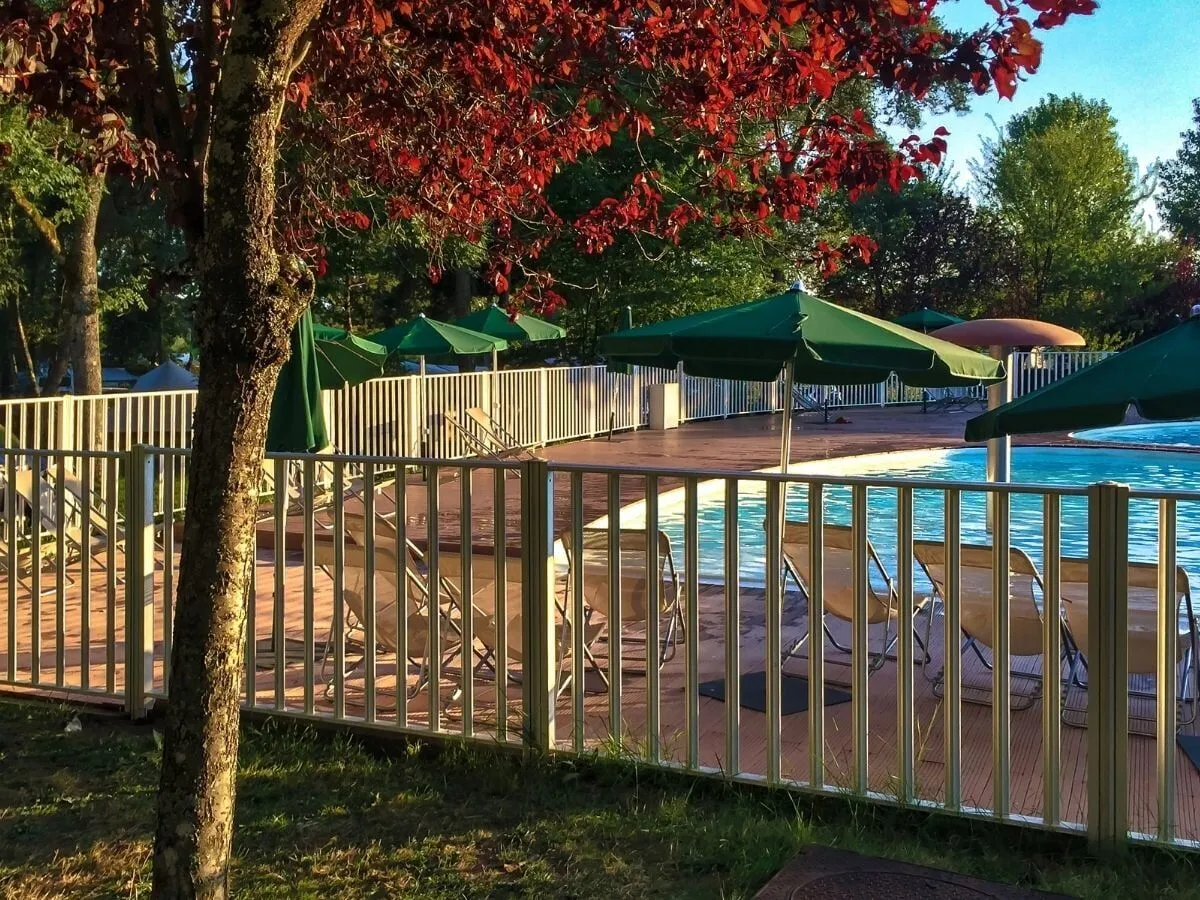
A NSW pool fence needs to stand at least 1.2m high with gaps no wider than 10cm, a clear 90cm non-climbable zone, a gate that shuts and latches by itself, a readable CPR sign and a registered pool, so a spring check comes down to five things you can test with a tape measure.
Before the first hot weekend, walk your pool fence with a tape measure. In NSW the fence must be at least 1.2m high, measured from finished ground level, with a bottom gap no bigger than 10cm and a 90cm non-climbable zone kept clear. The gate has to shut and latch by itself. The CPR sign has to be readable. The pool has to be on the register.
That is five checks, and you can do all of them in one lap of the yard.
The rules have not changed for this summer. NSW will adopt NCC 2025 on 1 May 2027, so the checks below run on the current standards. We covered what the 2027 change means in an earlier post in our fencing guides.
Does the NSW pool law cover your pool or spa?
67%
of toddler drownings happen in swimming pools
78% of drownings are due to children falling into water
Probably, if it holds water deeper than a bucket. The Swimming Pools Act 1992 applies to pools and spas on sites with a residential building, movable dwelling or tourist and visitor accommodation. It covers any excavation, structure or vessel that can be filled to more than 30cm deep and is used for swimming, wading or paddling.
That includes the inflatable pool that comes out of the shed each December. Portable and inflatable pools that can hold more than 30cm of water need the same child-resistant barrier, and pools over 2,000L may also need development approval, so check with your council.
The reason sits in two numbers. According to the NSW pools hub, citing Kidsafe, 67% of toddler drownings happen in swimming pools, and 78% of drownings are due to children falling into water.
The core duty is simple. Owners must at all times keep a child-resistant barrier separating the pool from any residential building and any place adjoining the property, keep pool doors and gates closed, and have the fence designed, built, installed and maintained to the relevant Australian Standard.
How high does a NSW pool fence need to be?
The minimum is 1.2m, measured from finished ground level. Where a boundary fence forms part of the pool fence, the barrier must be 1.8m high.
"Finished ground level" is the part people miss. A new garden bed, a deeper layer of mulch or a step of pavers built up against the outside of the fence all raise the ground a child stands on. Measure from what is there now, not from what was there when the fence went in.
For how fence heights work more generally, see our guide to fence height rules in NSW.
What gaps are allowed under and between the bars?
Three measurements, all on the NSW owner obligations page:
- Bottom gap no bigger than 10cm.
- Gaps of no more than 10cm between vertical bars.
- Horizontal climbable bars at least 90cm apart.
The bottom gap is the one that drifts. Heavy rain washes soil and mulch out from under a fence line, and a 7cm gap in autumn can be a 12cm gap by spring. Run the tape along the whole length, not just beside the gate. The diagram above shows where each measurement is taken.
What hole size is allowed in a mesh or chainwire pool fence?
| Barrier height | What the NSW page says about holes |
|---|---|
| 1.2m | "no greater than 13mm" |
| 1.8m | holes greater than 13mm "must not exceed 100mm" |
| Your council or a certifier decides whether your fence complies. | |
This is the measurement that matters most for a mesh fence. The NSW page says that for mesh or perforated barriers, holes must be no greater than 13mm at 1.2m height. For taller fences, it says 1.8m-high barriers with holes greater than 13mm must not exceed 100mm.
Many chainwire meshes used for boundary and security fencing have openings well over 13mm. So a mesh fence that does a fine job keeping dogs in may not be the right barrier around a pool. Measure an opening and compare it with your fence height, then put the question to your council or a certifier, who decides whether your particular fence complies. Our guide to choosing gauge and mesh size explains how mesh is measured.
How far does the non-climbable zone reach?
Before
After
Further than most people think. The page says there must be no trees, shrubs, barbecues, pot plants, toys, ladders or chairs within 90cm. That 90cm is measured in an arc from the top of the fence towards the ground, and also extends 30cm inside the pool area.
Spring is when this zone fills up. Shrubs put on a growth spurt, the outdoor chairs come back out and the barbecue gets wheeled to wherever the shade is. Clear a full arm's length along the outside of the fence, and check the strip inside too.
Storms add to it. NSW SES storm season runs September to April, and a fallen branch leaning on a pool fence is both a climbing aid and a possible bent panel. If wind has done damage, our page on fence repairs after storm damage covers what to look for.
Is your pool gate closing and latching on its own?
Gate checks
Maintenance
The gate gets the most use and the least attention. The NSW page lists four checks: the gate is never propped open, it swings outwards, away from the pool (otherwise re-hang it), it shuts automatically from any open position without forcing, and it self-latches when it closes.
Test it properly. Open the gate a hand's width and let go. Then open it all the way and let go. It should close and latch from both, every time.
If it hesitates, the page's maintenance advice is practical: tighten loose bolts, screws and fasteners, and spray self-closing hinges, locks and latches with lubricating oil or silicone. A gate that still drags after that usually has a sagging post or a worn hinge, which is a repair rather than a squirt of oil. Our guide to chain link gate latches explains the main latch types.
One more thing on access points: doors and windows forming part of a pool fence or barrier are "no longer allowed".
Which standard applies to an older pool?
It depends on when the pool was built. The NSW page sets it out this way:
- AS 1926-1986 may apply to pools built before 30 August 2008.
- AS 1926.1-2007 may apply to pools built 1 September 2008 to 30 April 2013.
- AS 1926.1-2012 applies to pools built after 1 May 2013.
If your pool was finished close to one of those dates, ask a certifier which one applies to you.
Renovating the house or the yard can end an older pool's exemptions, because once the barrier is modified or altered, the current Act, Swimming Pools Regulation 2018 and AS1926.1-2012 apply and previous exemptions cease.
That matters in spring, when a lot of yard projects start. A new deck, a moved gate or a replaced section of fence can pull the whole barrier up to the 2012 standard. Plan the fence work with the renovation, not after it. Our older page on NSW pool fencing regulations covers the background to the 2013 changes.
Does your CPR sign need replacing?
You need one either way. A CPR sign is required near the pool, including portable pools, and it must be in good condition and easily readable from 3m away.
New signs took effect 1 September 2019, and all new pools must use the updated sign.
If you own an existing pool, you need not update your CPR sign unless the pool barrier is substantially altered or rebuilt.
So the spring check is about condition. Stand 3m back. If sun has faded the sign, or a climbing plant has half covered it, replace or clear it.
Is a registered pool a compliant pool?
| Swimming Pool Register | Certificate of compliance | |
|---|---|---|
| Who needs it | All pool owners | Needed to sell (or one of the alternatives) and to rent |
| What it shows | The pool is registered against the property address | Compliance, assessed by inspection |
| Who does it | Owner, or council for a small fee | Councils and registered swimming pool inspectors |
| Certificate valid for 3 years |
No. Registration does not mean the pool meets requirements, because compliance is assessed separately by inspection.
Registering is still compulsory. All owners must register on the Swimming Pool Register, and owners can ask their council to register for them for a small fee. The upgraded Swimming Pool Register launched 16 March 2026, and pools are now registered by property address only, not owner details.
Compliance is a separate document. A certificate of compliance is valid for 3 years, and councils and registered swimming pool inspectors can issue it. Councils also run barrier inspection programs and can direct owners to fix non-compliance.
What if you are selling or leasing a property with a pool?
The paperwork has to be in place before the contract or the lease. When selling, the contract must include a registration certificate plus one of three documents: an occupation certificate issued within the last 3 years, a valid certificate of compliance, or a certificate of non-compliance.
Without one, the buyer may rescind within 14 days of exchange unless settlement has occurred. With a non-compliance certificate, the buyer has 90 days from settlement to fix the defects. The page notes exceptions for strata and off-the-plan sales.
When leasing, the landlord or agent must give the tenant a copy of the certificate of compliance or occupation certificate, and a non-compliance certificate cannot be used to rent.
The page advises contacting councils or registered inspectors early before a sale or lease. If repairs come out of the inspection, that early start gives you time to get them done.
The five spring checks at a glance
Fence height and gaps. The non-climbable zone, outside and in. The gate. The CPR sign. The register. If all five hold up, you have done the owner's part of the job for this summer. Whether the fence complies is still a question for your council or a certifier, and for the rules in force, the NSW owner obligations page is the place to check.
Getting fence and gate repairs done
A spring check usually turns up the same few jobs: a gate that no longer closes from every angle, a latch that sticks, loose fasteners, a bottom gap that has opened up, or a mesh panel that needs a closer look.
You choose who fixes them. Certifiers may do minor repairs up to $1,000 (labour and materials) to enable a compliance certificate, if they hold the right licence, and the owner is free to hire another tradesperson.
Chainwire Fencing Specialist has built chainwire, steel and aluminium fencing and gates across Newcastle, the Hunter Valley and the Central Coast since 2004. We can quote the fence and gate work your check or your inspection has flagged. The compliance decision stays with your council or certifier. For routine upkeep between checks, see our guide to maintaining and repairing a chainwire fence.
Your next step: note the fence height, the gaps you measured and what the gate is doing, take a few photos, and send them through our fencing quote request. If you would rather talk it through, call us on 02 4023 5416.
Sources
- NSW Government, Swimming pool owner obligations: https://www.nsw.gov.au/housing-and-construction/building-or-renovating-a-home/pools-and-pool-safety/owner-obligations
- NSW Government, Pools and pool safety: https://www.nsw.gov.au/housing-and-construction/building-or-renovating-a-home/pools-and-pool-safety
- NSW Building Commission, An improved Swimming Pool Register has launched: https://www.nsw.gov.au/departments-and-agencies/building-commission/news/an-improved-swimming-pool-register-has-launched
- NSW Government ministerial release, NSW to adopt new National Construction Code May 2027: https://www.nsw.gov.au/ministerial-releases/nsw-to-adopt-new-national-construction-code-may-2027
- NSW SES, Storm season: https://www.ses.nsw.gov.au/stormseason