
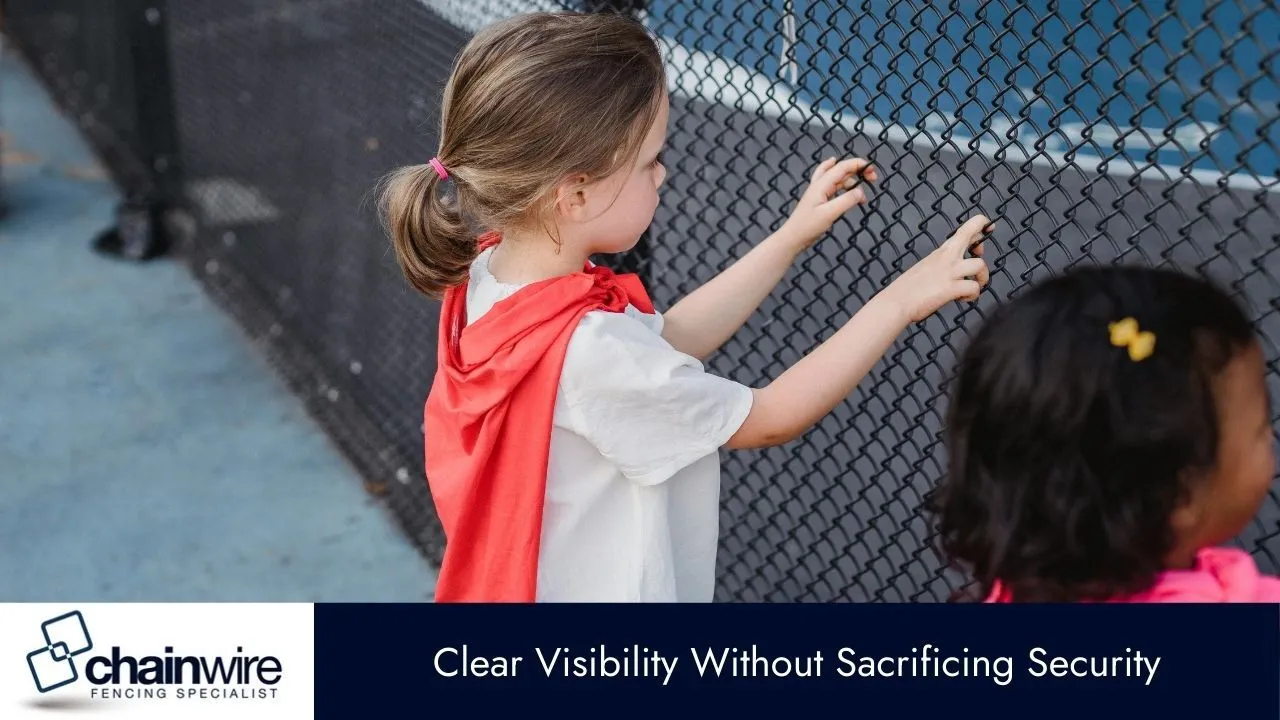
When people weigh up a boundary, chainlink fencing and a brick or concrete wall often end up head to head. Chainlink, also called chainwire, chain mesh, cyclone or hurricane fence, tends to lose the beauty contest and win almost everything else. Here are eight ways it beats a wall, and why the modern versions are far from the plain silver mesh people picture.
8 advantages over a wall
1. It costs a fraction of a wall. A wall has to be built high to be effective, and concrete and brick are dear before you add transport and labour. Chainlink fences the same boundary for a fraction of the cost, and with benefits a wall does not offer.
2. It barely needs maintenance. A wall needs painting or sealing every few years to stop it weathering. Galvanised chainwire just sits there. The zinc coating shrugs off rust for well over a decade with little more than the occasional hose-down.
3. Privacy is optional, not lost. The old knock on chainlink is that you can see straight through it. True, until you add privacy slats, which insert vertically, horizontally or diagonally to block the view and lift the look. You get an open fence or a private one from the same system.
4. It is built to be functional. Chainlink was never meant to be ornamental. It exists to keep intruders out and mark a boundary reliably, and it does that job better per dollar than almost anything else.
5. Installation is quick and simple. A wall needs a contracting crew, heavy machinery and time. Chainwire goes up with standard tools and light groundwork, which keeps the labour cost and the disruption down.
6. It flexes instead of failing. In high wind or a storm a rigid wall cracks; chainwire bends and absorbs the load while the posts hold it upright. This is exactly why it earned the name cyclone fencing, and why it suits coastal and storm-prone sites.
7. It saves time. A wall can take months to build, reinforce and finish. Fencing the same boundary in chainwire takes a fraction of that, so the site is secured far sooner.
8. It can be moved. A wall is permanent, so if you acquire more land or change the layout it has to come down. A chainwire fence lifts out of its footings and shifts to a new line with minimal fuss.
Not all chainlink is the same
Part of what makes chainwire so adaptable is how much you can vary in the spec. Three things change how a fence performs and looks: the coating, the gauge, and the mesh.
Coating. The wire comes in four main finishes:
- Galvanised (zinc-coated) is the most common, rust-resistant and long-lasting for well over a decade, and the usual pick for homes and general boundaries.
- Aluminium is lightweight, corrosion-resistant and can last decades, which suits commercial and rural settings.
- Stainless steel is the most durable and the dearest, used for high-value enclosures on airports, rail lines and highways.
- PVC-coated bonds a coloured, rubberised finish to the steel, resisting rust while adding colour options like black, brown and green that blend into the landscape.
Gauge and height. The lower the gauge number, the thicker and stronger the wire. Australian-made mesh runs from around 0.6 m to 3.6 m in height, with a standard security fence at 1.8 m, and strands of barbed wire can top it to make climbing harder. Our guide to choosing the right gauge and mesh size covers how to match these to the job.
Design and colour. A budget fence uses a three-cable design, with plain wire twisted either side of the post for tension. Adding top and bottom rails increases the strength and life of the fence significantly, and a black or green finish softens the look and helps it disappear into greenery.
Where chainwire works best
Its mix of visibility, strength and low upkeep is why chainwire turns up almost everywhere:
- Homes, marking boundaries and keeping pets and children safe without walling the yard in. See our fencing ideas for pet owners.
- Sports courts and recreation areas, containing play while keeping sightlines open. More in our sports field fencing guide.
- Parks, reserves and school grounds, sectioning off playgrounds and guiding foot traffic with childproof gate latches.
- Industrial sites and temporary zones, protecting tools, vehicles and staff while keeping the yard visible, permanently footed or on weighted temporary bases.
- Animal control and land management, holding livestock and dividing pens while letting handlers watch the animals in real time.
Built for Australian conditions, and recyclable
Because it flexes rather than snaps, chainwire holds up through the strong winds, sun and salt that punish other fences, from the coast to inland sports fields. Damage tends to be isolated, so you cut out and replace a single section instead of the whole run. And at the end of its life it is fully recyclable as scrap steel, which makes it a genuinely low-waste choice.
The takeaway
Against a wall, chainlink wins on cost, speed, maintenance, flexibility and weather resistance, and gives up only the solid look, which privacy slats can largely restore anyway. Choose the coating for your climate, the gauge and mesh for the job, and add rails or a barbed top where security demands it. For a boundary that has to work hard without costing the earth, chainwire is the classic choice for a reason. Chainwire Fencing Specialist has designed, fabricated and installed it across Newcastle, Lake Macquarie and the Hunter since 2004.