
Chainwire has been the go-to for industrial security for decades, and the reasons hold up. On a site that may run hundreds or thousands of metres of perimeter, the fence has to be strong, affordable at scale, easy to keep an eye through, and quick to repair. Chainwire does all four, which is why depots, warehouses, plants, substations and solar farms keep specifying it.
Strength that suits a working site
Galvanised chainwire shrugs off harsh weather, resists corrosion, and takes the knocks of a busy industrial environment, plant movement, dust, chemicals and high traffic. It gives you a robust barrier that holds its integrity over years rather than degrading like lighter materials. Heavier gauge wire and a security top (barbed or razor) turn it from a boundary into a genuine deterrent where the risk warrants it.
Cost that works at scale
Cost matters on any industrial project, and chainwire delivers real security without the price of a solid wall. Over long perimeters that difference compounds, so you can secure the whole site properly instead of protecting only the frontage. It is a budget-conscious choice that does not trade away protection.
You can still see the site
A solid wall hides what is behind it, from your own patrols as much as from a passer-by. Chainwire's open weave keeps the site visible and monitorable, cameras see through it, security can watch across it, and a neighbour or patrol can spot movement inside. On an industrial site where surveillance is part of the security plan, that visibility is an asset, not a compromise.
Easy to adapt and repair
Every site is different, and chainwire bends to fit, varying heights, densities and finishes, with gates and access control built into the run. When something does get damaged, repairs are localised: swap or re-tension the affected section rather than overhaul the fence, so operations are barely interrupted. For the routine side of that, our maintenance and repair guide covers keeping it right.
Securing solar farms and remote assets
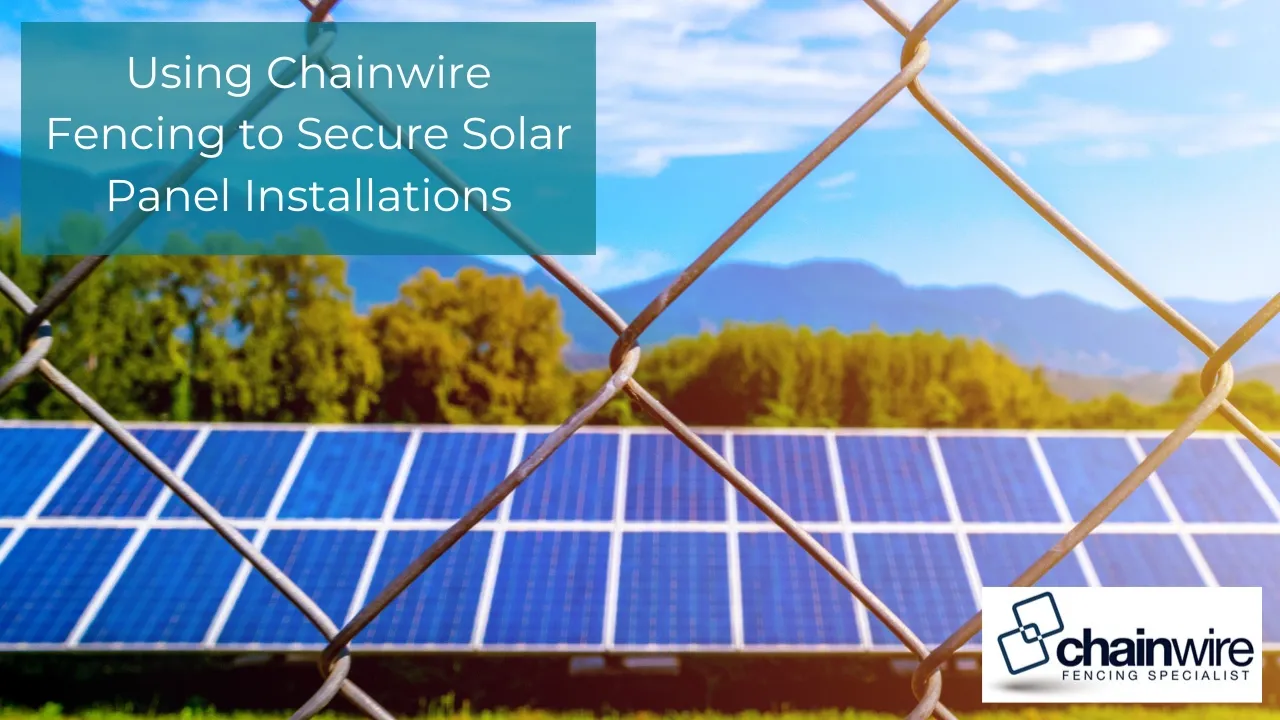
Solar farms are a growing case in point, high-value, often remote, and full of exactly what thieves target, panels, inverters and copper cabling. A tall chainwire perimeter is the practical answer: it covers a large area affordably, keeps the array visible for camera coverage and patrols, and can be run with a security top and detection where the site is unmanned. The same logic applies to any remote asset, pump stations, telecoms sites, storage compounds, where you need a strong, watchable boundary over a big footprint without a wall's cost or blind spots.
Built for the demanding sites
Industrial work often means sites with strict access and compliance, and that is where experience shows. Our crews are ticketed to work on rail corridors, and we have fenced across mines, power stations, railways and government facilities, the kind of jobs where the fence has to meet Australian Standards and the crew has to hold current certifications just to be on site. If your perimeter has those requirements, they are worth confirming up front.
The practical takeaway: for a large industrial perimeter, chainwire gives you strength, cost-efficiency, visibility for surveillance, and section-by-section repair, with the height and security top scaled to the risk. We design, supply and install industrial chainwire fencing across Newcastle, the Hunter and beyond, including on sites with tight safety and access requirements.