
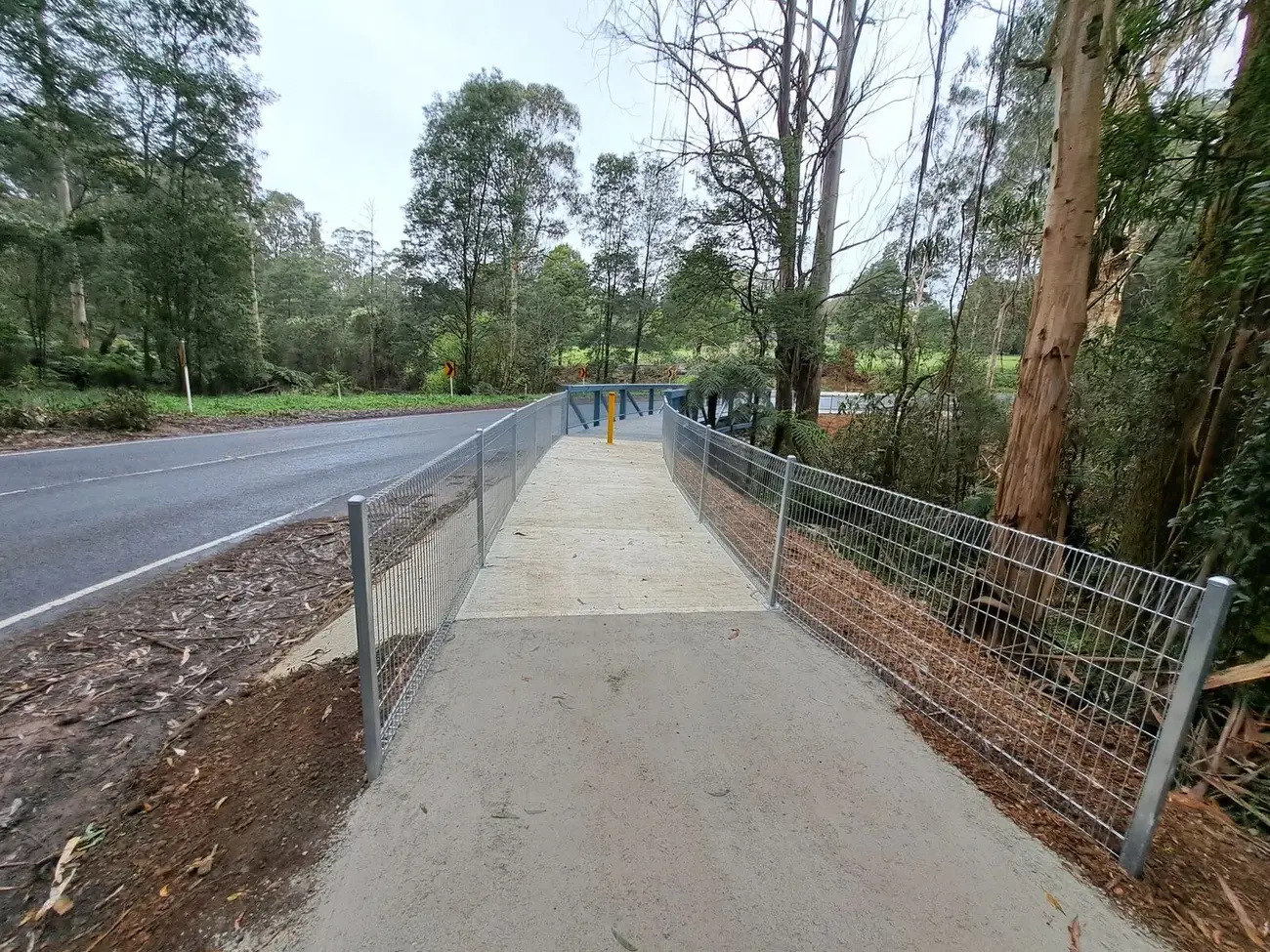
Weldmesh fencing, sometimes just called mesh fencing, uses steel wires welded at each intersection into a rigid panel rather than the woven mesh of chainwire. That construction makes it harder to climb, harder to cut and cleaner to look at, which is why it suits everything from a smart residential boundary to a hard industrial perimeter.
Why weldmesh
- Security, the welded grid gives no easy foothold and resists being peeled or cut.
- Strength, high-tensile steel panels stand up to weather and knocks without sagging.
- Visibility, you keep clear sight lines through the fence for monitoring.
- Low maintenance, galvanised or PVC-coated finishes shrug off corrosion.
- A tidy look, the flat rigid panels read as neat and modern.
Anti-climb and 358 mesh for high-security sites
Where a site needs to stop climbing and cutting outright, we move to high-security weldmesh, often called anti-climb or 358 mesh. The name refers to the aperture: roughly 76 mm by 12.5 mm openings, too small to get a finger, toe or the tip of most tools into. That means no foothold to climb and very little purchase to cut. It is the mesh you see around substations, correctional and detention sites, transport infrastructure, data centres and other places where a standard fence is not enough. Panels can run to 3 m and above, and pair with toppings where the threat level calls for it.
Customising the fence to the job
Weldmesh is not one product. We set it up around your requirement:
- Height, from a low residential run up to full high-security spans.
- Mesh size, large apertures for open boundaries down to the tight 358 spec for anti-climb.
- Finish, galvanised or PVC coated for extra corrosion resistance.
- Colour, a range to match the property or blend into the surrounds.
Where it goes
Homes and gardens, warehouses and retail, factories and construction sites, parks and playgrounds, schools and universities, and secure infrastructure all use weldmesh. For open perimeters where visibility and airflow matter more than climb resistance, ordinary chainwire fencing is often the more economical pick.
If you can tell us what you are protecting and how determined the threat is, we will point you to the right mesh rather than oversell the spec.