
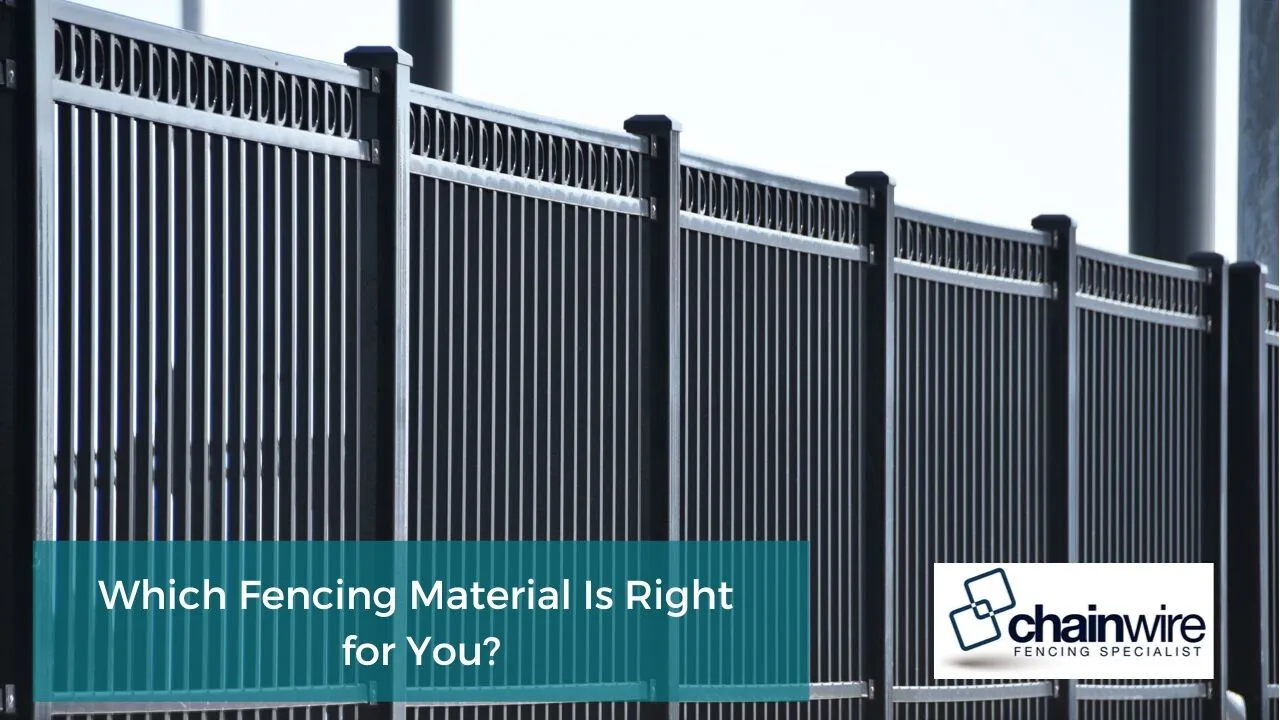
Choosing a fencing material is harder than it looks, because every option has a trade-off. Aluminium has become popular for its durability, low maintenance and clean looks, but it is not automatically the right answer. This guide compares aluminium against the materials people most often weigh it against, so you can make the call with your eyes open.
A note on what we do: we install metal fencing, chainwire, steel and aluminium. Timber, PVC and wrought iron come up in the comparisons below because you will likely be weighing them up, but they are a different trade. If a timber fence is what you are after, we will say so rather than talk you into metal.
Why aluminium is popular
Durability and weather resistance
Aluminium resists rust, corrosion and weathering, which makes it well suited to Australian conditions. Unlike untreated steel, which can rust over time, or timber, which warps and rots, aluminium holds its integrity for decades with minimal upkeep.
Low maintenance
This is aluminium's biggest drawcard. It comes with a powder-coated finish that protects it from the elements, so there is no staining, sealing or repainting, just the occasional wash.
Lightweight and easy to install
Aluminium is lighter than steel, which means faster installation and lower labour cost without giving up much in the way of style or day-to-day security.
Stylish and customisable
It comes in a range of designs, colours and finishes, so it can be matched to a modern or a more traditional look on a home or a business.
How aluminium compares
Aluminium vs steel
| Aluminium | Steel | |
|---|---|---|
| Weight | Light, easy to install | Heavy, needs professional install |
| Rust | Does not rust | Can rust, especially near the coast |
| Strength | Strong enough for most jobs | Stronger, but needs the right coating |
Steel is the choice for genuine high-security work. Aluminium gives you enough security for most homes and businesses while being far easier to handle and maintain. For heavier jobs, see our steel fencing.
Aluminium vs timber
| Aluminium | Timber | |
|---|---|---|
| Durability | Rust and weather resistant | Prone to rot, termites and weather |
| Maintenance | Low, no painting | High, regular staining and sealing |
| Cost | Medium | Low upfront, higher over its life |
Timber is a natural, classic look, but it asks for a lot of upkeep. Aluminium wins on durability and long-term cost. If you specifically want the timber look, that is a different trade.
Aluminium vs PVC
| Aluminium | PVC | |
|---|---|---|
| Durability | Highly durable, weather resistant | Can go brittle with UV over time |
| Appearance | Sleek, premium | Can fade and discolour |
| Recyclability | Fully recyclable | Not readily recyclable |
PVC is cheap and low maintenance but lacks the premium look and long life of aluminium.
Aluminium vs wrought iron
| Aluminium | Wrought iron | |
|---|---|---|
| Weight | Lightweight | Heavy, hard to install |
| Maintenance | Low, does not rust | High, frequent repainting to stop rust |
| Cost | More affordable | One of the dearest materials |
Wrought iron has an elegant look but comes with high cost and constant upkeep. Aluminium can give a similar decorative feel with far less work.
So which is right for you?
If you want a fence that is durable, good-looking and low maintenance, aluminium is a strong choice, particularly for:
- homes wanting a modern, sleek boundary
- commercial premises needing a durable, low-upkeep fence
- coastal properties that need rust resistance
- anyone who would rather not be maintaining a fence every year.
If you need maximum strength and security, steel is the better metal. If you want the fully open, see-through, cost-effective option, chainwire is worth a look. Between those three metals we can point you to the right one for the site. See our aluminium fencing and gates for what aluminium looks like in practice.